

By Henry Song, Artificial intelligence and data science in multiple long-term conditions theme PhD student
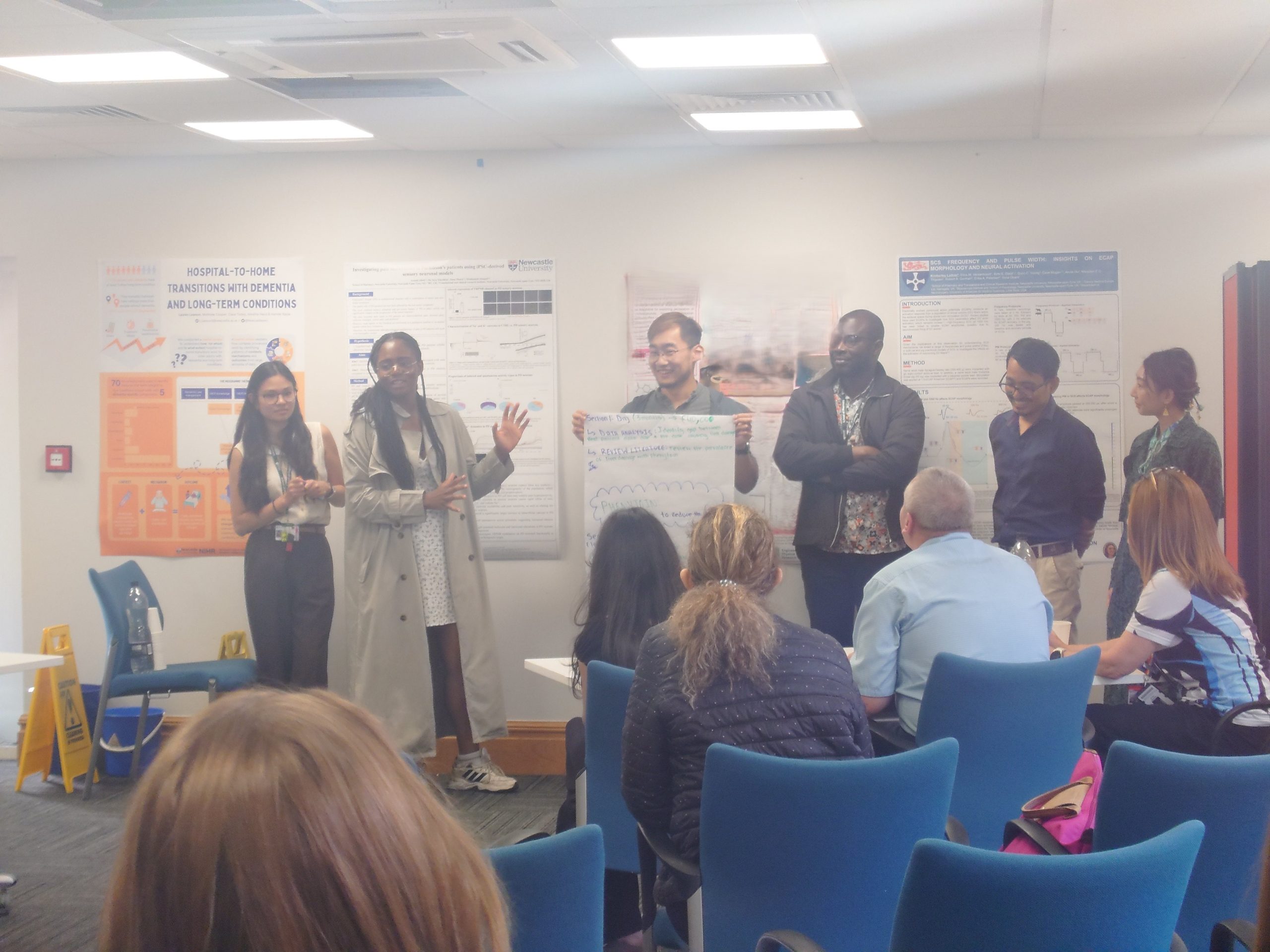
Attending the NIHR Newcastle PSRC/Pharmacy event on the 19th of June was a very positive experience for me. Although I was not able to present my latest research findings due to recent changes in my project dataset, the day still proved to be highly valuable.
I had the chance to see a wide range of presentations from fellow students and colleagues. Some of the work provided direct inspiration for my own research, while others helped to broaden my perspective on the diverse approaches within our field. I was particularly struck by the experimental-based studies on display, which were not only highly innovative but also showed real potential for future impact.
In the afternoon, the workshop on research funding applications was especially useful. It gave me a first insight into the key steps, structure, and approaches involved in applying for research grants. This will no doubt be very important as I continue to develop my academic career.
Overall, the event was an excellent opportunity to learn, connect, and reflect on both my own project and the wider research landscape.
Co-authors: Domna Salonen, NIHR Newcastle PSRC PhD student Haley, Joanne and Carol from the co-development group
Patient safety research considers various matters of life, death and health. These are not any academic topics. For many people, these are experiences they have lived through and are living with.
Before I started my research training, I became a practitioner. Mental health occupational therapy taught me a lot about healthcare and relationships. I learned that it is wise to listen to patients. Two different people can have the same condition, but completely different experiences. I also learned that it is caring to have difficult conversations. At its best, healthcare is about moments when a person in pain gets to talk with someone who is wise and caring. Both the patient and the practitioner use their voice, both listen, both learn.
Now I am learning to research. I have clear boundaries between how I engage with people as a researcher and as a therapist. There are great differences in how to build and navigate relationships in each role. As different as it is to show up as a researcher and as a practitioner, there are some similarities. At its best, also research is about people having good conversations. Researchers and people with personal experience get together to speak, listen and learn.

In my doctoral research, I work with a group of people who I have met through my previous projects. Different group members have personal experiences to share. Some know how it feels to live with addiction, and how it is to recover. Some have been family carers for someone with mental health problems. The common ground is that we all have a strong idea on what mental health support is at its best and at its worst.
We all bring with us our own reasons and motivations to do our bit in research:
Joanne: I want to improve things for others. I want to make positive, long-lasting change easier for everyone: professionals, policymakers, patients, families.
Haley: I want people’s voices to be heard by those who make big decisions at the higher levels. Research is a vital help.
Domna: I research because I want to understand how health systems can grow in wisdom and care. In this group, I can test my ideas and connect with practice memories.
Carol: I want to share my lived experience as a carer by helping with research and use it to help make change for future generations.
Together, we work with clear ground rules. One person speaks at a time, everyone listens. If someone shares a personal story in the room, it stays in the room. We agree and disagree with uncompromising respect. Honesty is essential and expression is free – we can swear, but not at each other.
While we keep the conversation flowing, we get things done. We have spent time talking through the logic behind the project. We have developed information sheets for research participants. We have thought through scenarios that could bring up ethical challenges. We prepare to make sense of data together in the next stages of the research. We have gathered ideas on who to connect with in the later stages of the project, to share findings and learning.
We keep the conversation alive to catch ideas and build new understanding – of healthcare and of each other. We can all agree that hope lives where people sit around a shared table and speak their minds.
Dr Anna Robinson-Barella
Director of EDI for the NIHR Newcastle PSRC and the Newcastle University School of Pharmacy, Lecture in Pharmacy.
As we approach this new academic year, I am filled with intrigue and curiosity at the prospect of attending the equity diversity and inclusivity (EDI) events that are planned, in collaboration between the NIHR Newcastle PSRC and the Newcastle University School of Pharmacy. As Director for EDI, I am passionate about inclusion, diversity, representation and equity within all that we do in the PSRC – that includes the approaches that our team implement within in their research, as well as the support available for our staff and colleagues. I view the collaborative EDI events as a brilliant opportunity to hear from experts and those with lived-experiences and to learn how to make meaningful change towards equitable, inclusive and effective patient care. I am very much looking forward to the events that we have planned for attendees this year.
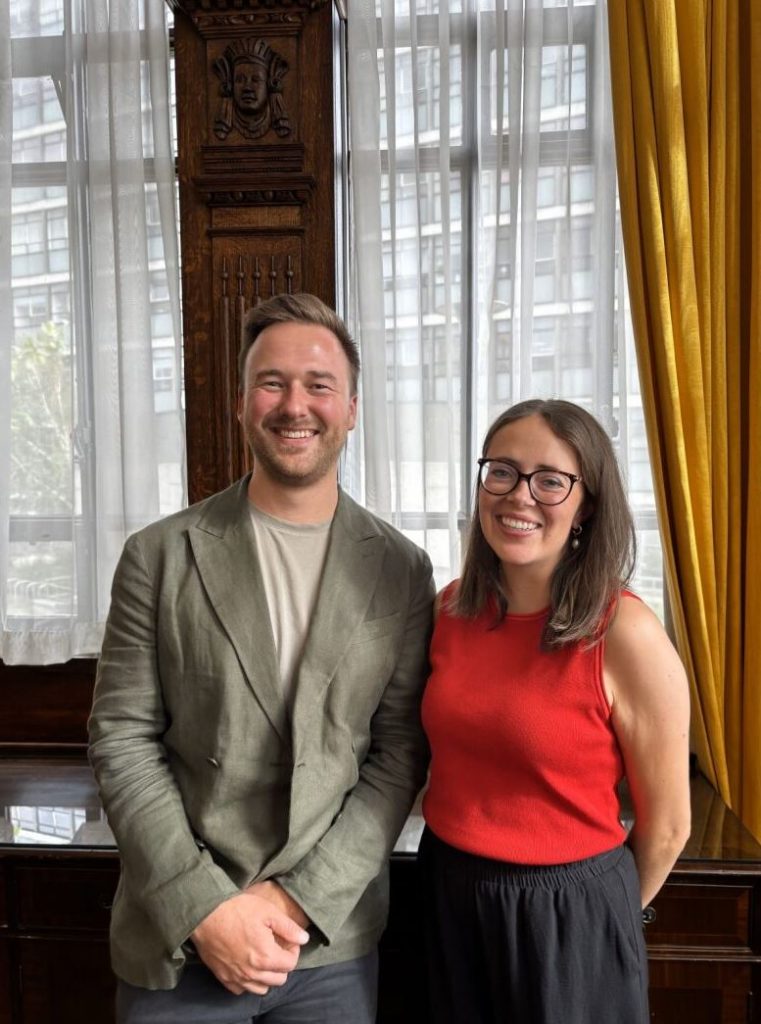
Dr Matt Cooper
Deputy-Director of EDI for the NIHR Newcastle PSRC and the Newcastle University School of Pharmacy, Research Associate in NIHR Newcastle PSRC.
I am excited to start my first full academic year as Deputy Director for EDI within the NIHR Newcastle PSRC and the Newcastle University School of Pharmacy. I hope within my role I can support Anna in her Director role and ensure that the EDI strategy is delivered in all aspects of our work. I am particularly passionate about ensuring inclusive research that is translational to practice and building a better future for everyone. The goal of the PSRC is to make real world change within patient safety for patients and the public, of which EDI is a central pillar to this work. The EDI events we will be hosting over the next academic year shine a light on this commitment as we look to learn from those making a difference with their work, inspiring the next generation of pharmacists and researchers. I encourage everyone to attend them if they can and please do reach out with future topics for our next events.
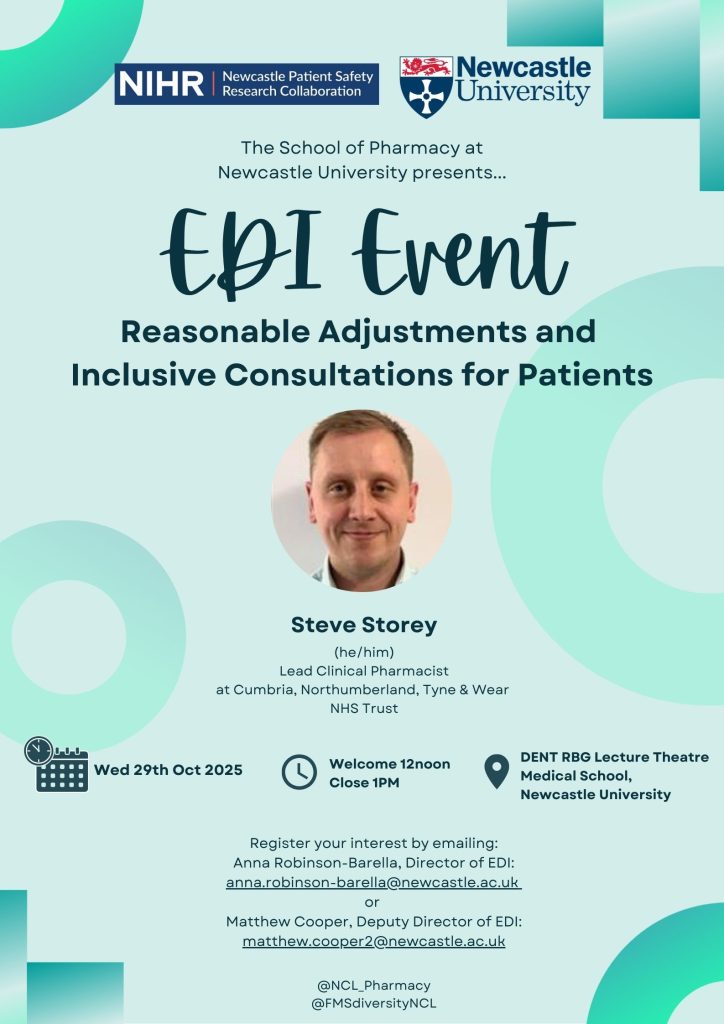
Next EDI Event – Wed 29th October 2025 at 12.00 – 13.00 on the subject of Reasonable Adjustments
A Pre-implementation Study to develop and test an Integrated Discharge Intervention (PreSIDInt study)
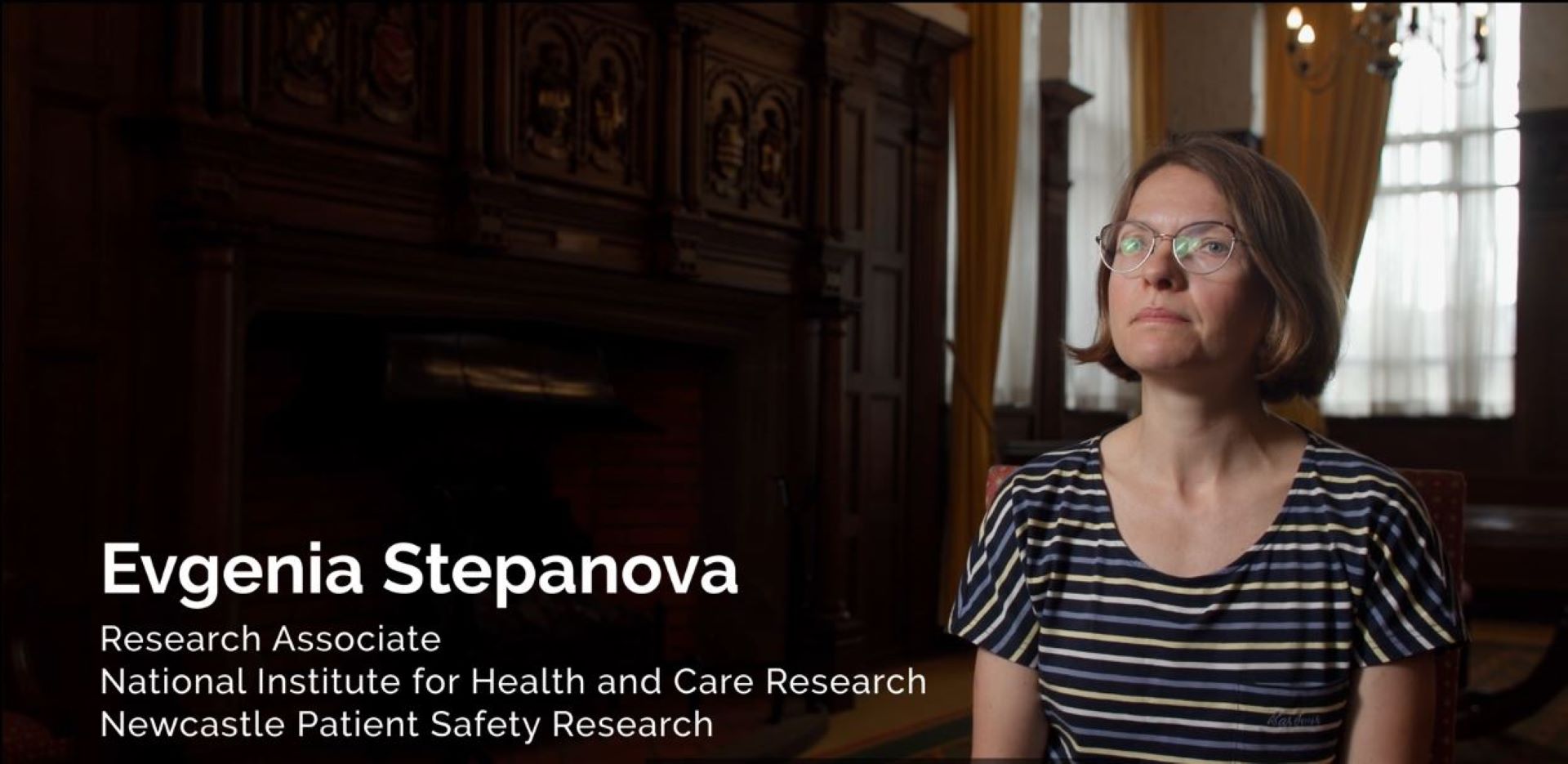
As part of a research project funded by the National Institute for Health and Social Care Research, Professor Hamde Nazar and Dr Evgenia Stepanova explore what happens to patients during the transition from hospital to home. In this video, they highlight the essential role of involving patients and the public through meaningful PPIE (Patient and Public Involvement and Engagement).
To ensure a safe and inclusive space for open dialogue, the project established two PPIE groups—a women-only group and a mixed group—each meeting four times throughout the study. These conversations offered crucial insights into real experiences of hospital discharge, revealing gaps in current research and shedding light on challenges that patients regularly face, such as feeling “in limbo”—with limited information, no clear point of contact, and uncertainty about available support.
Hamde and Evgenia reflect on how these contributions shaped the research and deepened its relevance and impact.
Programme Development Grants award NIHR205674 A Pre-implementation Study to develop and test an Integrated Discharge Intervention (PreSIDInt study)

Experience of participation and poster presentation.
By PhD Student Rajeev Shrestha
On 18th July 2025, I got the opportunity to attend the Great North Pharmacy Research Collaborative (GNPRC) Conference, held at the Hilton Hotel, Gateshead. This event brought together pharmacy professionals, researchers, and pharmacy trainees to explore innovations in medicines optimisation, collaboration, and workforce development.
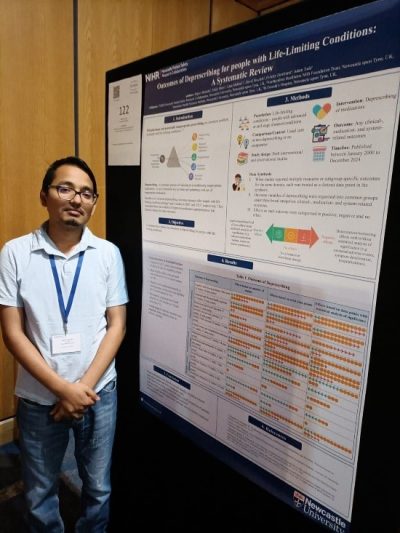
A key highlight for me was presenting my poster titled “Outcome of Deprescribing in People with Life-Limiting Conditions: A Systematic Review”. This study aimed to synthesise evidence on the clinical-, medicine and system-related outcomes of deprescribing practices among palliative patients. I had an opportunity to interact with fellow attendees during the poster viewing sessions that really sparked meaningful conversations around the safer use of medication. Personally, it was encouraging to see the ongoing works on reducing inappropriate use of medication by practising pharmacists.
The conference agenda was rich with insightful sessions. I particularly appreciated the breakout session on “Shared Decision Making and its Role in Reducing Overprescribing,” which also resonate with the area of my research. The growing emphasis on collaboration across sectors, from community pharmacies to NHS manufacturing, highlighted the evolving role of pharmacists in shaping safer, more effective care pathways.
Overall, GNPRC 2025 was a valuable experience to me. The event inspired new ideas, informed ongoing initiatives and deepened our commitment to contributing to quality use of medications.
During the summer of 2025, Dr Matt Cooper and Dr Charlotte Richardson hosted four undergraduate and postgraduate students at Newcastle University to complete a research internship. Three of the interns have reflected on this experience.

Imogen Tate (BSc Hons Psychology with Professional Placement)
I am currently a BSc Psychology with Professional Placement student going into my 4th year (stage 3), and this summer I completed a month internship working on the scoping review ‘Caring for the Carer: What are the active ingredients of interventions supporting informal carers’ wellbeing and welfare needs?’ under the supervision of Dr Matt Cooper.
I was supported to title and abstract screen using Rayyan, full-text screen and data extract, and conduct a promise analysis of the included papers. This experience has significantly developed my research skills for scoping/systematic review. Notably, I have enhanced my problem-solving skills for refining a research question throughout this process, as a high volume of papers were initially included; I enjoyed the collaborative nature of evaluating the project’s direction when problems arose. I am looking forward to seeing the meaningful impact on carer wellbeing that the project will have.
I am so pleased to have had the opportunity to attend the 2nd annual NIHR Newcastle PSRC and School of Pharmacy Conference 2025 in my first week, as it gave me great understanding of the scope of the work that is conducted within the department and provided insight into where my psychology background is advantageous.
I particularly valued working in such a welcoming and supportive environment surrounded by fellow interns and PhD students with such a wide range of research interests. This experience has reaffirmed that I would love to pursue a PhD one day and eventually a career that has a platform for both clinical and academic practice!
Neave Woollam (BSc Hons Psychology with Professional Placement)
I am currently an undergraduate psychology with professional placement year student at Newcastle University, and this summer I completed a four-week long internship supervised by Dr Matthew Cooper. The project was a scoping review looking at interventions to support carers’ wellbeing and welfare needs.
This created a great opportunity for me to develop my research and professional skills. Including learning to use a new software (Rayaan) to screen papers, doing data extraction and a promise analysis. When our original search returned an overwhelming number of papers, it was really interesting to see how the search was refined to deal with this. This gave me insight into how to tailor search strategies when conducting a scoping review.
I enjoyed working in an office alongside other interns and PhD students. I loved hearing about the different topics being researched and the range of methodologies being used to do so. It really opened my eyes up to the possibilities within pharmacy research and made me realise it’s not all lab based. I especially enjoyed hearing about the Patient and Public Involvement (PPI) work that informed this review. Seeing the coproduced artwork really inspired me and made me think about PPI in research more creatively.
Overall, I hope to continue using the skills, knowledge and experience I have gained over this internship in my final year of university and in my career.
Tom Collis (MSc in Data Science and Artificial Intelligence)
Hi, my name is Tom, I am currently studying an MSc in Data Science and Artificial Intelligence at Newcastle University. Prior to this I studied Medicine at Newcastle University, and I subsequently completed my Foundation Years, and a Clinical Teaching Fellow Year. In June and July 2025 I undertook this fascinating research internship with the School of Pharmacy, under the supervision of Dr Richardson and Dr Cooper.
The internship project involved a systematic review exploring the roles and experience of caregivers in virtual wards. With the NHS aiming to move more care from inpatient hospitals into the community, virtual wards, with the support of caregivers, will be fundamental to facilitating this shift in the location of patient care. The role and experiences of caregivers within virtual wards is an under-researched area, and this systematic review aimed to provide an overview of the existing literature, and a guide for future research projects.
This internship was greatly rewarding, educational, and enjoyable. Working within a team of driven academics was inspiring and has further fuelled my passion for working within academia. Being based in the Newcastle Patient Safety Research Collaboration office gave me an insight into the valuable work being undertaken at Newcastle University, aimed towards improving patient safety and care. The skills and knowledge I have gained from the internship, in particular how to conduct a systematic review, have been invaluable, and have given me a strong foundation to build upon in my future training. Additionally, being involved in the design of the systematic review, and all stages of its undertaking, meant I developed an insight into the complex nature of carrying out research, and how obstacles can be overcome through teamwork, communication, and lateral thinking. I have no doubt that this experience has developed my research skills and will underlie all future work in academia that I hope to undertake. Thank you very much Dr Richardson and Dr Cooper for this opportunity, and your support!
I’m Liam, a Specialist Clinical Pharmacist in Acute and Emergency Care at Northumbria Healthcare NHS Foundation Trust. I split my time between clinical practice (four days a week) and research (one day a week) through the NIHR Newcastle PSRC Patient Safety Development Award. Since graduating from Newcastle University’s School of Pharmacy in 2022, I’ve been building my research career alongside clinical development, driven by a passion for research sparked during my undergraduate studies.

The NIHR Newcastle PSRC’s impact on clinicians
Traditionally, clinical practice and academia have been seen as separate career paths. Clinicians interested in research often had to pursue it in their own time, outside of demanding full-time roles.
The NIHR clinical academic pathway has transformed this by funding protected research time and reimbursing employers, allowing clinicians to step away from practice to pursue research.
For me, this has meant one day each week seconded at NIHR Newcastle PSRC, where I’ve developed core research skills. Working with experienced researchers has helped me understand the full project lifecycle, from shaping early ideas and designing methodology to recruiting participants, collecting data, and writing up results.
Building Collaborations
Embedding clinicians within the NIHR Newcastle PSRC helps build strong links with partner organisations. Connections with charities and local health and social care providers create future opportunities at both individual and organisational levels. This also broadens the chance for under-represented groups to have a voice, influence practice, and help reduce health inequalities.
At Newcastle University, embedded clinicians benefit from access to leading academics in their field and can learn from their experience. Previously, collaborations were often ad hoc, such as draft reviews or methodology advice. These awards now enable clinicians to work more closely with academics and gain a deeper understanding of research and academia.
Why is this valuable to the public?
Research-active organisations are linked to better patient outcomes. Combining clinical work with research lets me address real issues I encounter in practice, shaping projects that can drive meaningful change.
In acute medicine, I’ve focused on discharge and follow-up challenges. Through the NIHR Newcastle PSRC, I’m now working on a project exploring these issues for homecare recipients and those working in the industry.
Being embedded in both sectors also helps spread research findings more effectively, supporting better service improvements and outcomes.
Next Steps
A key goal is to encourage more healthcare professionals to engage in research. The NIHR clinical academic pathway supports this by offering development alongside clinical roles, leading to qualifications and national research leadership opportunities.
Professor Hamde Nazar sums up the event with PPIE member, Susan Mountain.
On 11th June 2025, the first of a series of events in June focussing on Virtual Wards (hospital at home) was hosted by the Newcastle NIHR PSRC. Representatives across many of the PSRCs contributed to the planning and organisation of this SafetyNet event.
Given the increasing drive for the use of technology in healthcare, the event brought together practitioners, researchers and patient and public representatives to discuss and consider the opportunity and challenges of the use of technology to support virtual ward service delivery.
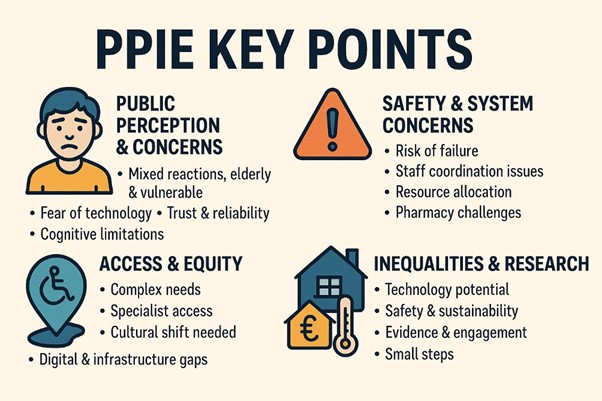
The day started off considering the patient and public voice first and foremost. The figure below summarises discussions from a patient and public involvement and engagement (PPIE) session held earlier in the year. Concerns were aired about the feasibility of technology being appropriate and accessible to all people, with other considerations voiced about the reliability of technology and trusting its effectiveness and security. People acknowledged that there are key challenges to address within the system around the workforce being properly resourced and trained, and about the existing IT infrastructure being fit for purpose. By the end of the discussion, people had ‘warmed’ to the idea, appreciating the opportunities for efficiency and potential improvements in care. However, people were keen to see small incremental developments with rigorous monitoring and evaluation to ensure people and patients were able to keep up and be reassured about the safety, equity and effectiveness of technological advancements within the NHS.
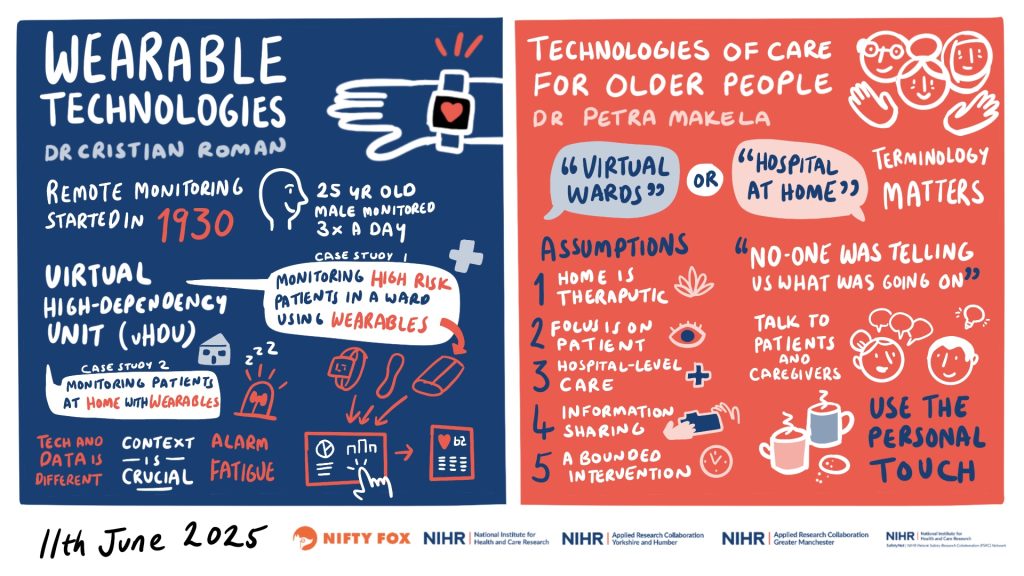
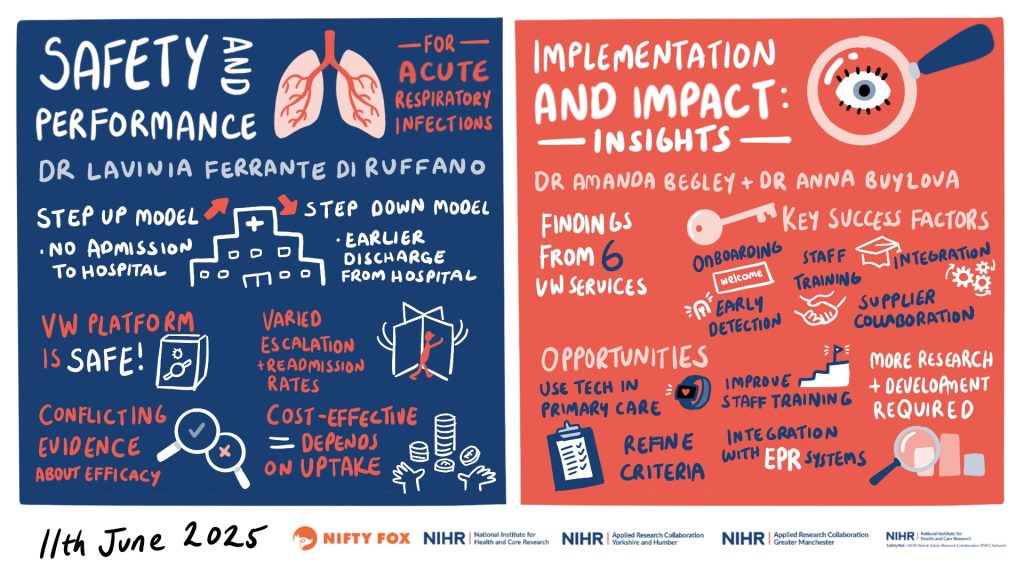
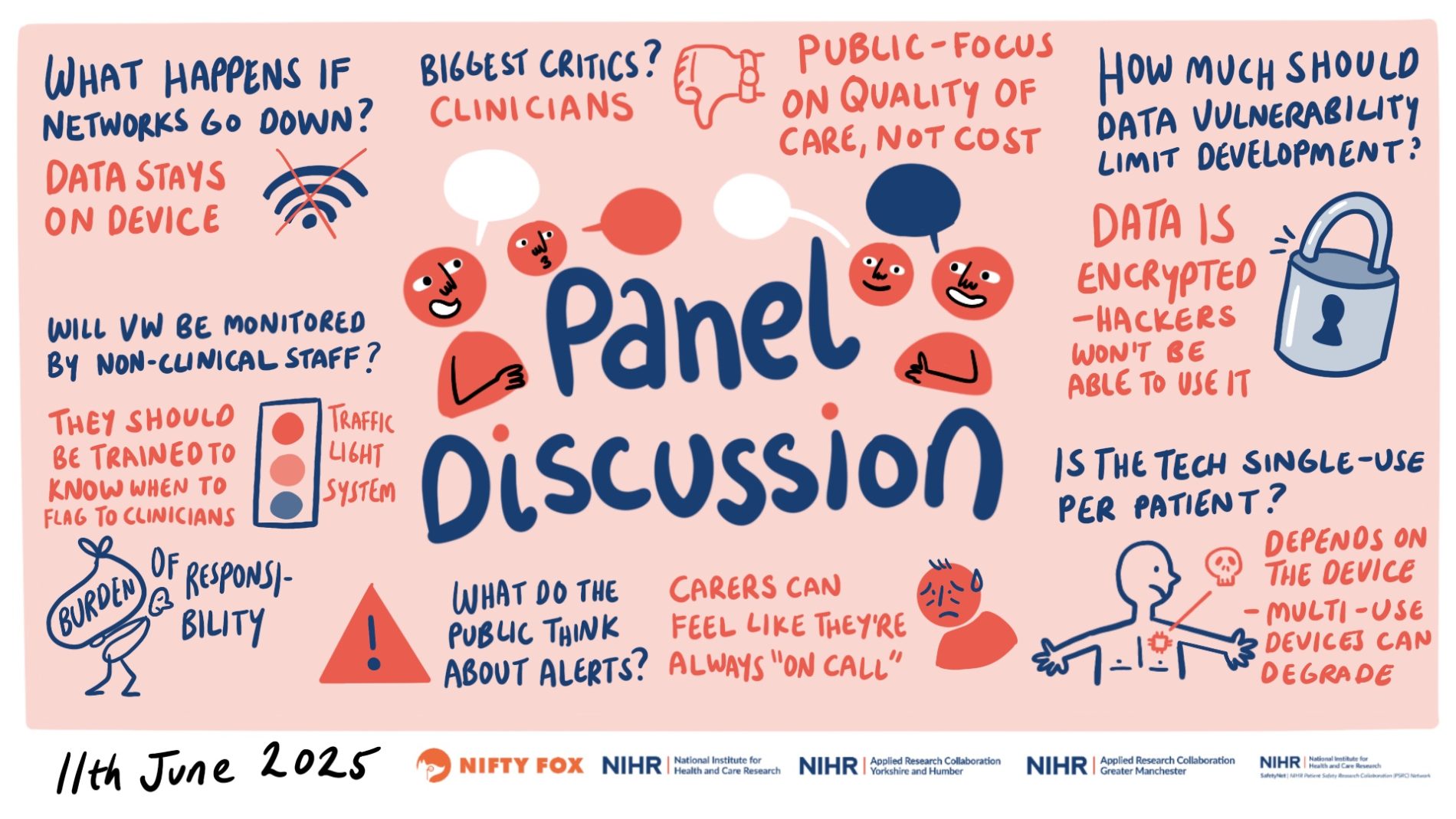
The event then included keynote speakers providing insight into existing evidence for the use of technology, with regards to effectiveness, impact on clinical outcomes and economic repercussions. These have been well captured in a series of scribes created by Claire Hubbard from Nifty Fox Creative.
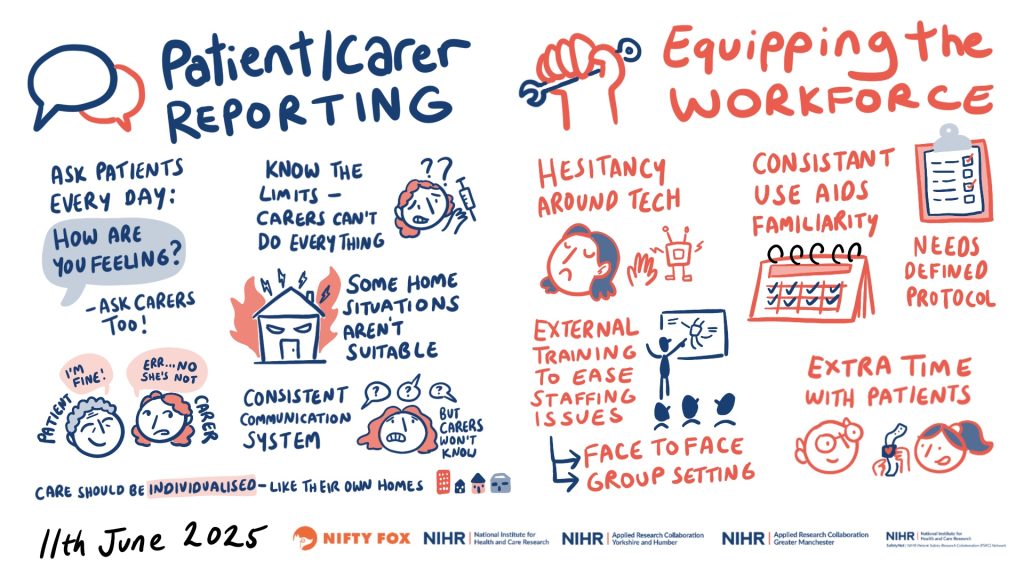
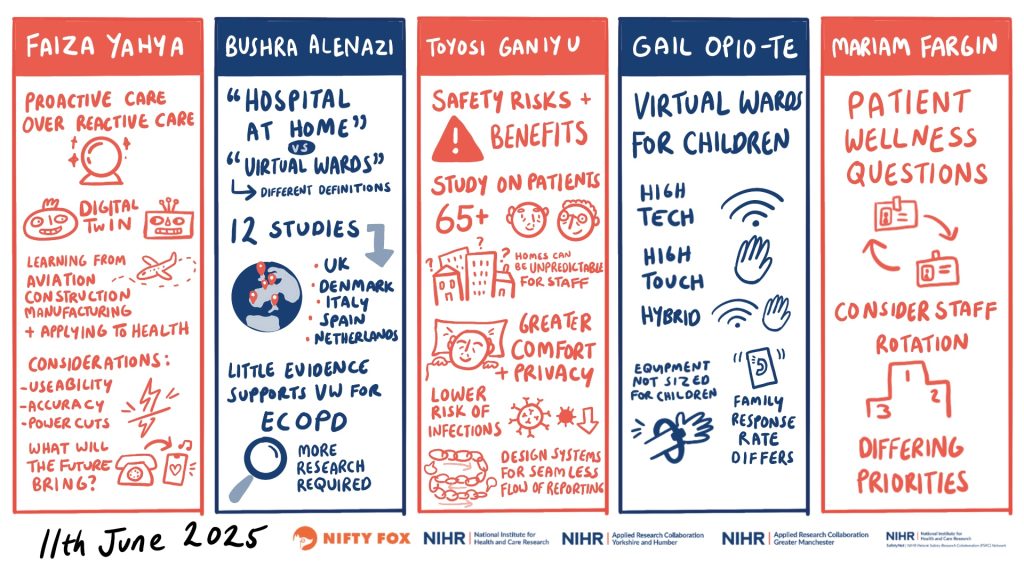
The final panel discussion saw the keynote speakers tackling provoking questions posed by the audience, e.g., ‘how do we ensure equity in technology-enabled virtual wards?’, ‘what are the biggest challenges for the implementation of technology?’, ‘how sustainable is the use of technology in virtual wards?’
There was rich debate, and we can safely say we did not go away with all the answers. Virtual ward care, and technology use in this service model is a quagmire of half-knowns and unknowns. There is need for scrutiny and evaluation of service models to understand what is working, where, how and for which patients and their carers.
The recently released NHS 10-year plan frames technology as the default mechanism to engage with health by 2035. This means trying to understand how technology is deployed and used in virtual ward care is crucial and continued resource and engagement across practitioners, researchers and public and patient representatives is needed.
On that note, one of our patient and public representatives who attended the event provides her experience and takeaway thoughts:
My name is Susan Mountain and I live with multiple long-term conditions. I became involved with public involvement in 2019 and since then I have been part of many research projects, I am a public contributor to the PSRC, AI Multiply, ARC, CNTW, Sunderland University PCPI team, a campaigner for smoking cessation and I help with the Secure Data Environment.
I attended the SafetyNet Technology Enabled Virtual Wards event and found it very interesting. I heard many people talk of virtual wards but to be honest no one really convinced me that they are currently safe. I personally don’t think they are looking at the families that are involved when a patient is sent home using the virtual ward apparatus. I am concerned that there will be too much pressure on the family.
On that note, one of our patient and public representatives who attended the event provides her experience and takeaway thoughts:
I understand that there are benefits: it reduces the pressure on hospital beds; research has shown people recover quicker in home settings and it reduces the chances of infections in recovering patients.
They talked about patients being provided with medical devices to track vital signs and that all data would be transmitted to the hospital where it will be checked at regular intervals. It did worry me if the internet stops working, then how can they monitor. I had an elderly Mam in hospital and even in hospital I had to advocate for her so what would happen if she was at home?
I believe the PSRC has an important role to play in ensuring that this is fully researched before it is rolled out. It is also vital that staff are properly trained and that there is appropriate internet access in the cases selected for treatment at home.
Blog 4
Value of Being Involved in PPIE – Tynara Kindred-McArthur
Being involved in PPIE has had nothing but positive impacts for me. Through the Youth Forum and YPAG, I have been able to be involved with countless research projects, I have been part of teams helping researchers target their work to children and young people, as well as contributing with what may be more or less beneficial for their work. Although I have worked with multiple researchers and staff, I have always felt heard and listened to. It has been so important to me to hear that young people are getting a chance to influence things that are targeted towards them.
Whilst there have been different styles of presentations, the structure I prefer is a brief introduction that explains the project in terms I can understand. It’s important that I am able to understand how the research is intended to help people, in order to offer the best advice. I find that open-ended questions work best, as they allow the young people to be able to fully express their views, which can lead to new ideas or conversation topics that researchers hadn’t previously considered. It is also helpful to have the choice of giving input anonymously, as that has allowed me to give more insight that I wouldn’t feel comfortable sharing publicly.
My experience of PPIE has given me a greater understanding of research. It has allowed me to understand the different methods used to gather data, as well as showing me just how wide an array of areas, even just within the medical world, can be benefited by research and PPIE.
My involvement has helped me develop more problem-solving skills, as I am often faced with questions and topics I have never considered before, meaning that each time I need to think of different ways something could be done or improved upon. This is also transferable to other areas of life and will continue to benefit me as I go through the world, as I am now already used to thinking in different ways in order to help to the best of my abilities.

Value of PPIE in Research, Abigail Collins
Working with young people like Tynara in PPIE work is incredibly important. PPIE allows members of the public to help shape research and gives them the opportunity to have more insight into the research process. I have found that involving PPIE enriches research projects greatly, and the value PPIE can have, not only for the research itself, but also for public contributors, should not be underestimated.

Blog 3
Bringing carers together to share their insights.
Participating in the Tilly Hale Carer Research Panel has been a transformative experience. As a carer and a public contributor to this panel, the opportunity to participate has had profound personal impacts. It has provided me with a deeper understanding of my own caregiving journey and a sense of purpose in contributing to the betterment of care systems. The process of collaboration, sharing lived experiences, and shaping the direction of research has been both enlightening and empowering.
At its core, the Tilly Hale Carer Research Panel is about bringing carers together to share their insights. From a personal standpoint, participating in this research panel has given me a sense of community and validation. The panel comprises carers from diverse backgrounds, each with their own unique challenges and triumphs. The opportunity to come together and discuss shared experiences has been incredibly valuable. It is rare to find a space where carers are not just seen as passive recipients of services but are actively shaping how those services should evolve. The recognition that our lived experiences as carers are critical to informing research has not only validated my role but also provided me with a platform to amplify the needs of carers on a broader scale.
One of the impactful aspects of being part of this panel is the chance to influence the direction of research. The topics we discussed, such as caring during transitions from hospital to home or supporting those with mental health or cognitive impairments, resonated deeply with me and many of the other carers involved. During discussions, we were encouraged to share our personal stories, reflect on the gaps in care, and highlight areas where improvements are desperately needed.

The research panel has also provided me with a deeper understanding of the broader implications of caregiving. It has been inspiring to see how the collaboration has evolved and how research projects have been informed by the input of carers, and by the discussions and insights shared within the panel.
The group’s discussions on topics like the use of digital technology in caregiving and supporting carers themselves have contributed to the research and have also influenced the ways I approach caregiving in my personal life. For instance, the exploration of digital resources and virtual wards has opened my eyes to the potential of technology in improving care delivery, particularly during times of transition when support systems can be fragmented.
One of the most rewarding aspects of being involved in the Tilly Hale Carer Research Panel has been the way it has impacted my own caregiving journey. The research is not just theoretical or academic; it is highly personal. The issues we discuss are the same ones I faced daily—whether it is appropriate support for mental health or cognitive impairments, or dealing with the emotional and physical toll caregiving takes on one’s health. The panel has not only helped me gain new perspectives on these challenges but has also empowered me to advocate for better support and resources. It has been incredibly validating to know that my experiences are part of a larger conversation and that I am contributing to research that could lead to tangible improvements in the care systems we rely on.
The art piece commissioned by the panel, which reflects the experiences of carers, is a testament to the power of storytelling in research. It not only serves as a visual representation of our collective experiences but also highlights the essential role carers play in the healthcare system. This piece, and the research it represents, gives a voice to those who are often overlooked and serves as a reminder of the need for systemic change to better support carers and the people they care for.
In conclusion, participating in the Tilly Hale Carer Research Panel has been a transformative experience. It has allowed me to reflect on my caregiving journey, contribute to meaningful research, and become an advocate for change. The collaborative nature of the group, the focus on lived experiences, and the opportunity to make a tangible impact on future research outcomes have all been invaluable. It has reinforced the importance of involving carers in the research process and has deepened my commitment to improving the lives of those who give so much of themselves in the service of others.
Public Contributor: David Black