

Experience of participation and poster presentation.
By PhD Student Rajeev Shrestha
On 18th July 2025, I got the opportunity to attend the Great North Pharmacy Research Collaborative (GNPRC) Conference, held at the Hilton Hotel, Gateshead. This event brought together pharmacy professionals, researchers, and pharmacy trainees to explore innovations in medicines optimisation, collaboration, and workforce development.
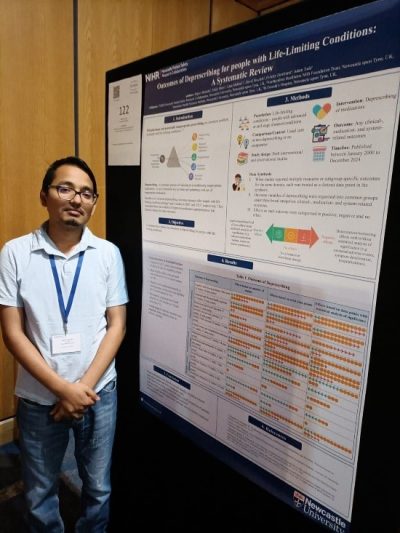
A key highlight for me was presenting my poster titled “Outcome of Deprescribing in People with Life-Limiting Conditions: A Systematic Review”. This study aimed to synthesise evidence on the clinical-, medicine and system-related outcomes of deprescribing practices among palliative patients. I had an opportunity to interact with fellow attendees during the poster viewing sessions that really sparked meaningful conversations around the safer use of medication. Personally, it was encouraging to see the ongoing works on reducing inappropriate use of medication by practising pharmacists.
The conference agenda was rich with insightful sessions. I particularly appreciated the breakout session on “Shared Decision Making and its Role in Reducing Overprescribing,” which also resonate with the area of my research. The growing emphasis on collaboration across sectors, from community pharmacies to NHS manufacturing, highlighted the evolving role of pharmacists in shaping safer, more effective care pathways.
Overall, GNPRC 2025 was a valuable experience to me. The event inspired new ideas, informed ongoing initiatives and deepened our commitment to contributing to quality use of medications.
During the summer of 2025, Dr Matt Cooper and Dr Charlotte Richardson hosted four undergraduate and postgraduate students at Newcastle University to complete a research internship. Three of the interns have reflected on this experience.

Imogen Tate (BSc Hons Psychology with Professional Placement)
I am currently a BSc Psychology with Professional Placement student going into my 4th year (stage 3), and this summer I completed a month internship working on the scoping review ‘Caring for the Carer: What are the active ingredients of interventions supporting informal carers’ wellbeing and welfare needs?’ under the supervision of Dr Matt Cooper.
I was supported to title and abstract screen using Rayyan, full-text screen and data extract, and conduct a promise analysis of the included papers. This experience has significantly developed my research skills for scoping/systematic review. Notably, I have enhanced my problem-solving skills for refining a research question throughout this process, as a high volume of papers were initially included; I enjoyed the collaborative nature of evaluating the project’s direction when problems arose. I am looking forward to seeing the meaningful impact on carer wellbeing that the project will have.
I am so pleased to have had the opportunity to attend the 2nd annual NIHR Newcastle PSRC and School of Pharmacy Conference 2025 in my first week, as it gave me great understanding of the scope of the work that is conducted within the department and provided insight into where my psychology background is advantageous.
I particularly valued working in such a welcoming and supportive environment surrounded by fellow interns and PhD students with such a wide range of research interests. This experience has reaffirmed that I would love to pursue a PhD one day and eventually a career that has a platform for both clinical and academic practice!
Neave Woollam (BSc Hons Psychology with Professional Placement)
I am currently an undergraduate psychology with professional placement year student at Newcastle University, and this summer I completed a four-week long internship supervised by Dr Matthew Cooper. The project was a scoping review looking at interventions to support carers’ wellbeing and welfare needs.
This created a great opportunity for me to develop my research and professional skills. Including learning to use a new software (Rayaan) to screen papers, doing data extraction and a promise analysis. When our original search returned an overwhelming number of papers, it was really interesting to see how the search was refined to deal with this. This gave me insight into how to tailor search strategies when conducting a scoping review.
I enjoyed working in an office alongside other interns and PhD students. I loved hearing about the different topics being researched and the range of methodologies being used to do so. It really opened my eyes up to the possibilities within pharmacy research and made me realise it’s not all lab based. I especially enjoyed hearing about the Patient and Public Involvement (PPI) work that informed this review. Seeing the coproduced artwork really inspired me and made me think about PPI in research more creatively.
Overall, I hope to continue using the skills, knowledge and experience I have gained over this internship in my final year of university and in my career.
Tom Collis (MSc in Data Science and Artificial Intelligence)
Hi, my name is Tom, I am currently studying an MSc in Data Science and Artificial Intelligence at Newcastle University. Prior to this I studied Medicine at Newcastle University, and I subsequently completed my Foundation Years, and a Clinical Teaching Fellow Year. In June and July 2025 I undertook this fascinating research internship with the School of Pharmacy, under the supervision of Dr Richardson and Dr Cooper.
The internship project involved a systematic review exploring the roles and experience of caregivers in virtual wards. With the NHS aiming to move more care from inpatient hospitals into the community, virtual wards, with the support of caregivers, will be fundamental to facilitating this shift in the location of patient care. The role and experiences of caregivers within virtual wards is an under-researched area, and this systematic review aimed to provide an overview of the existing literature, and a guide for future research projects.
This internship was greatly rewarding, educational, and enjoyable. Working within a team of driven academics was inspiring and has further fuelled my passion for working within academia. Being based in the Newcastle Patient Safety Research Collaboration office gave me an insight into the valuable work being undertaken at Newcastle University, aimed towards improving patient safety and care. The skills and knowledge I have gained from the internship, in particular how to conduct a systematic review, have been invaluable, and have given me a strong foundation to build upon in my future training. Additionally, being involved in the design of the systematic review, and all stages of its undertaking, meant I developed an insight into the complex nature of carrying out research, and how obstacles can be overcome through teamwork, communication, and lateral thinking. I have no doubt that this experience has developed my research skills and will underlie all future work in academia that I hope to undertake. Thank you very much Dr Richardson and Dr Cooper for this opportunity, and your support!
I’m Liam, a Specialist Clinical Pharmacist in Acute and Emergency Care at Northumbria Healthcare NHS Foundation Trust. I split my time between clinical practice (four days a week) and research (one day a week) through the NIHR Newcastle PSRC Patient Safety Development Award. Since graduating from Newcastle University’s School of Pharmacy in 2022, I’ve been building my research career alongside clinical development, driven by a passion for research sparked during my undergraduate studies.

The NIHR Newcastle PSRC’s impact on clinicians
Traditionally, clinical practice and academia have been seen as separate career paths. Clinicians interested in research often had to pursue it in their own time, outside of demanding full-time roles.
The NIHR clinical academic pathway has transformed this by funding protected research time and reimbursing employers, allowing clinicians to step away from practice to pursue research.
For me, this has meant one day each week seconded at NIHR Newcastle PSRC, where I’ve developed core research skills. Working with experienced researchers has helped me understand the full project lifecycle, from shaping early ideas and designing methodology to recruiting participants, collecting data, and writing up results.
Building Collaborations
Embedding clinicians within the NIHR Newcastle PSRC helps build strong links with partner organisations. Connections with charities and local health and social care providers create future opportunities at both individual and organisational levels. This also broadens the chance for under-represented groups to have a voice, influence practice, and help reduce health inequalities.
At Newcastle University, embedded clinicians benefit from access to leading academics in their field and can learn from their experience. Previously, collaborations were often ad hoc, such as draft reviews or methodology advice. These awards now enable clinicians to work more closely with academics and gain a deeper understanding of research and academia.
Why is this valuable to the public?
Research-active organisations are linked to better patient outcomes. Combining clinical work with research lets me address real issues I encounter in practice, shaping projects that can drive meaningful change.
In acute medicine, I’ve focused on discharge and follow-up challenges. Through the NIHR Newcastle PSRC, I’m now working on a project exploring these issues for homecare recipients and those working in the industry.
Being embedded in both sectors also helps spread research findings more effectively, supporting better service improvements and outcomes.
Next Steps
A key goal is to encourage more healthcare professionals to engage in research. The NIHR clinical academic pathway supports this by offering development alongside clinical roles, leading to qualifications and national research leadership opportunities.
Professor Hamde Nazar sums up the event with PPIE member, Susan Mountain.
On 11th June 2025, the first of a series of events in June focussing on Virtual Wards (hospital at home) was hosted by the Newcastle NIHR PSRC. Representatives across many of the PSRCs contributed to the planning and organisation of this SafetyNet event.
Given the increasing drive for the use of technology in healthcare, the event brought together practitioners, researchers and patient and public representatives to discuss and consider the opportunity and challenges of the use of technology to support virtual ward service delivery.
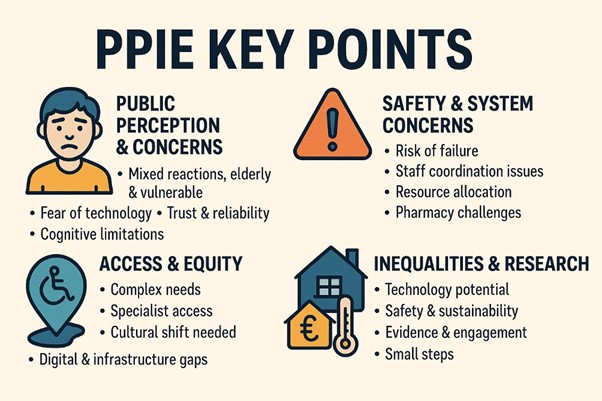
The day started off considering the patient and public voice first and foremost. The figure below summarises discussions from a patient and public involvement and engagement (PPIE) session held earlier in the year. Concerns were aired about the feasibility of technology being appropriate and accessible to all people, with other considerations voiced about the reliability of technology and trusting its effectiveness and security. People acknowledged that there are key challenges to address within the system around the workforce being properly resourced and trained, and about the existing IT infrastructure being fit for purpose. By the end of the discussion, people had ‘warmed’ to the idea, appreciating the opportunities for efficiency and potential improvements in care. However, people were keen to see small incremental developments with rigorous monitoring and evaluation to ensure people and patients were able to keep up and be reassured about the safety, equity and effectiveness of technological advancements within the NHS.
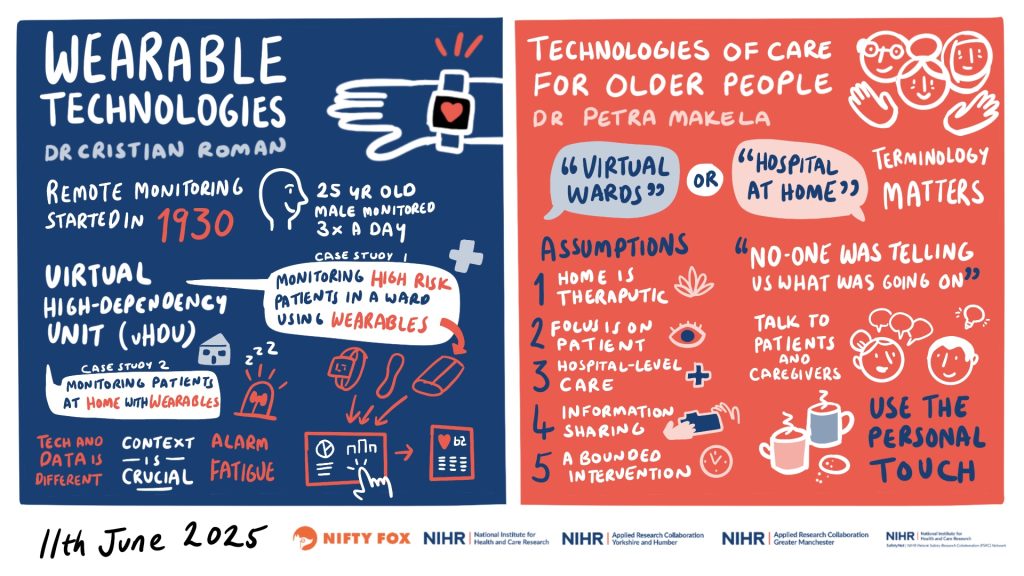
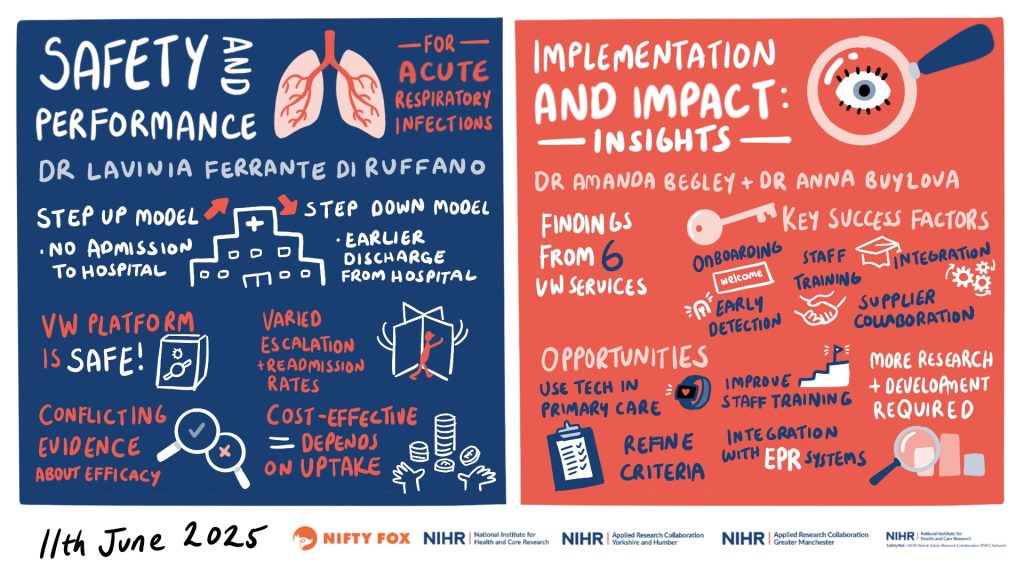
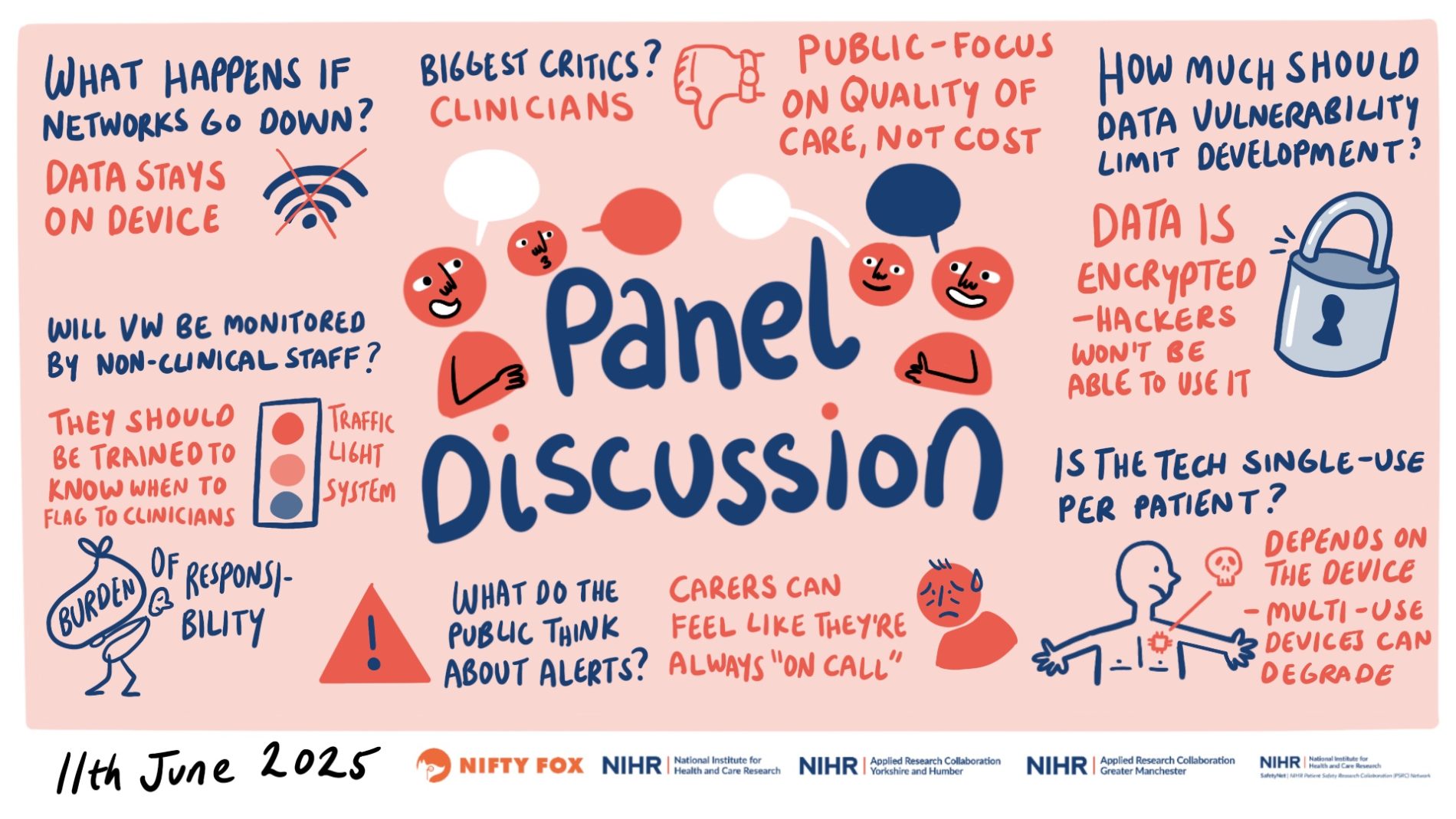
The event then included keynote speakers providing insight into existing evidence for the use of technology, with regards to effectiveness, impact on clinical outcomes and economic repercussions. These have been well captured in a series of scribes created by Claire Hubbard from Nifty Fox Creative.
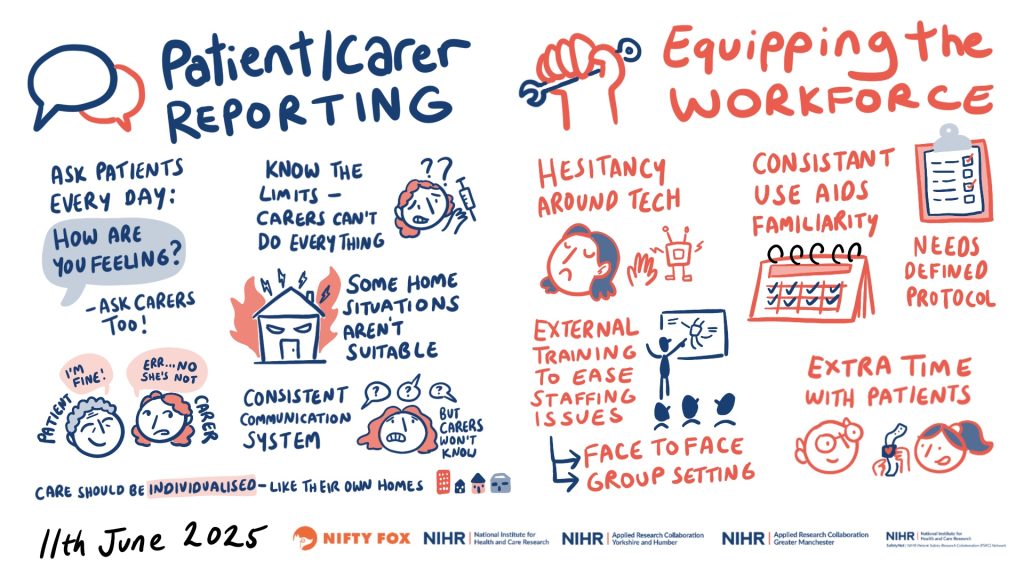
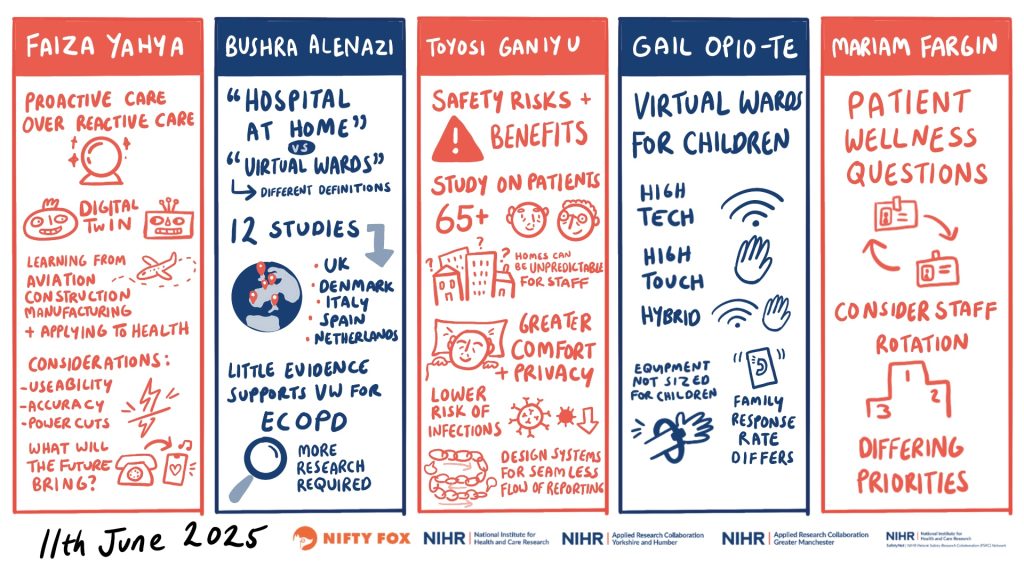
The final panel discussion saw the keynote speakers tackling provoking questions posed by the audience, e.g., ‘how do we ensure equity in technology-enabled virtual wards?’, ‘what are the biggest challenges for the implementation of technology?’, ‘how sustainable is the use of technology in virtual wards?’
There was rich debate, and we can safely say we did not go away with all the answers. Virtual ward care, and technology use in this service model is a quagmire of half-knowns and unknowns. There is need for scrutiny and evaluation of service models to understand what is working, where, how and for which patients and their carers.
The recently released NHS 10-year plan frames technology as the default mechanism to engage with health by 2035. This means trying to understand how technology is deployed and used in virtual ward care is crucial and continued resource and engagement across practitioners, researchers and public and patient representatives is needed.
On that note, one of our patient and public representatives who attended the event provides her experience and takeaway thoughts:
My name is Susan Mountain and I live with multiple long-term conditions. I became involved with public involvement in 2019 and since then I have been part of many research projects, I am a public contributor to the PSRC, AI Multiply, ARC, CNTW, Sunderland University PCPI team, a campaigner for smoking cessation and I help with the Secure Data Environment.
I attended the SafetyNet Technology Enabled Virtual Wards event and found it very interesting. I heard many people talk of virtual wards but to be honest no one really convinced me that they are currently safe. I personally don’t think they are looking at the families that are involved when a patient is sent home using the virtual ward apparatus. I am concerned that there will be too much pressure on the family.
On that note, one of our patient and public representatives who attended the event provides her experience and takeaway thoughts:
I understand that there are benefits: it reduces the pressure on hospital beds; research has shown people recover quicker in home settings and it reduces the chances of infections in recovering patients.
They talked about patients being provided with medical devices to track vital signs and that all data would be transmitted to the hospital where it will be checked at regular intervals. It did worry me if the internet stops working, then how can they monitor. I had an elderly Mam in hospital and even in hospital I had to advocate for her so what would happen if she was at home?
I believe the PSRC has an important role to play in ensuring that this is fully researched before it is rolled out. It is also vital that staff are properly trained and that there is appropriate internet access in the cases selected for treatment at home.
Blog 4
Value of Being Involved in PPIE – Tynara Kindred-McArthur
Being involved in PPIE has had nothing but positive impacts for me. Through the Youth Forum and YPAG, I have been able to be involved with countless research projects, I have been part of teams helping researchers target their work to children and young people, as well as contributing with what may be more or less beneficial for their work. Although I have worked with multiple researchers and staff, I have always felt heard and listened to. It has been so important to me to hear that young people are getting a chance to influence things that are targeted towards them.
Whilst there have been different styles of presentations, the structure I prefer is a brief introduction that explains the project in terms I can understand. It’s important that I am able to understand how the research is intended to help people, in order to offer the best advice. I find that open-ended questions work best, as they allow the young people to be able to fully express their views, which can lead to new ideas or conversation topics that researchers hadn’t previously considered. It is also helpful to have the choice of giving input anonymously, as that has allowed me to give more insight that I wouldn’t feel comfortable sharing publicly.
My experience of PPIE has given me a greater understanding of research. It has allowed me to understand the different methods used to gather data, as well as showing me just how wide an array of areas, even just within the medical world, can be benefited by research and PPIE.
My involvement has helped me develop more problem-solving skills, as I am often faced with questions and topics I have never considered before, meaning that each time I need to think of different ways something could be done or improved upon. This is also transferable to other areas of life and will continue to benefit me as I go through the world, as I am now already used to thinking in different ways in order to help to the best of my abilities.

Value of PPIE in Research, Abigail Collins
Working with young people like Tynara in PPIE work is incredibly important. PPIE allows members of the public to help shape research and gives them the opportunity to have more insight into the research process. I have found that involving PPIE enriches research projects greatly, and the value PPIE can have, not only for the research itself, but also for public contributors, should not be underestimated.

Blog 3
Bringing carers together to share their insights.
Participating in the Tilly Hale Carer Research Panel has been a transformative experience. As a carer and a public contributor to this panel, the opportunity to participate has had profound personal impacts. It has provided me with a deeper understanding of my own caregiving journey and a sense of purpose in contributing to the betterment of care systems. The process of collaboration, sharing lived experiences, and shaping the direction of research has been both enlightening and empowering.
At its core, the Tilly Hale Carer Research Panel is about bringing carers together to share their insights. From a personal standpoint, participating in this research panel has given me a sense of community and validation. The panel comprises carers from diverse backgrounds, each with their own unique challenges and triumphs. The opportunity to come together and discuss shared experiences has been incredibly valuable. It is rare to find a space where carers are not just seen as passive recipients of services but are actively shaping how those services should evolve. The recognition that our lived experiences as carers are critical to informing research has not only validated my role but also provided me with a platform to amplify the needs of carers on a broader scale.
One of the impactful aspects of being part of this panel is the chance to influence the direction of research. The topics we discussed, such as caring during transitions from hospital to home or supporting those with mental health or cognitive impairments, resonated deeply with me and many of the other carers involved. During discussions, we were encouraged to share our personal stories, reflect on the gaps in care, and highlight areas where improvements are desperately needed.

The research panel has also provided me with a deeper understanding of the broader implications of caregiving. It has been inspiring to see how the collaboration has evolved and how research projects have been informed by the input of carers, and by the discussions and insights shared within the panel.
The group’s discussions on topics like the use of digital technology in caregiving and supporting carers themselves have contributed to the research and have also influenced the ways I approach caregiving in my personal life. For instance, the exploration of digital resources and virtual wards has opened my eyes to the potential of technology in improving care delivery, particularly during times of transition when support systems can be fragmented.
One of the most rewarding aspects of being involved in the Tilly Hale Carer Research Panel has been the way it has impacted my own caregiving journey. The research is not just theoretical or academic; it is highly personal. The issues we discuss are the same ones I faced daily—whether it is appropriate support for mental health or cognitive impairments, or dealing with the emotional and physical toll caregiving takes on one’s health. The panel has not only helped me gain new perspectives on these challenges but has also empowered me to advocate for better support and resources. It has been incredibly validating to know that my experiences are part of a larger conversation and that I am contributing to research that could lead to tangible improvements in the care systems we rely on.
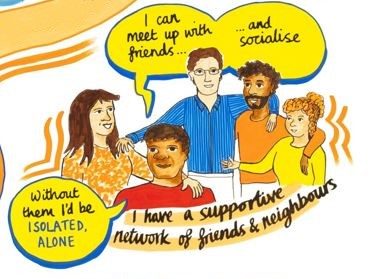
The art piece commissioned by the panel, which reflects the experiences of carers, is a testament to the power of storytelling in research. It not only serves as a visual representation of our collective experiences but also highlights the essential role carers play in the healthcare system. This piece, and the research it represents, gives a voice to those who are often overlooked and serves as a reminder of the need for systemic change to better support carers and the people they care for.
In conclusion, participating in the Tilly Hale Carer Research Panel has been a transformative experience. It has allowed me to reflect on my caregiving journey, contribute to meaningful research, and become an advocate for change. The collaborative nature of the group, the focus on lived experiences, and the opportunity to make a tangible impact on future research outcomes have all been invaluable. It has reinforced the importance of involving carers in the research process and has deepened my commitment to improving the lives of those who give so much of themselves in the service of others.
Public Contributor: David Black
Blog 1
Raising awareness of the unpaid, unselfish work unpaid family carers do.
I wondered if this group was genuinely interested in involving carers in its research. I knew Tilly Hale from Liver North, a brilliant organisation where we had talks with leading consultants and I felt valued and learned a lot.
The Tilly Hale Carer research group inspires me in my own research to raise awareness of the unpaid, unselfish work unpaid family carers do. The involvement of NIHR as funders adds strength for me that the group is genuine. The group helps me to meet others like me, albeit with different reasons for caring. I feel a little less isolated and my voice is heard with this group. In hospitals, carers need a stronger sense of inclusion in decision making and being involved in the triangulation of care as they have knowledge of the patient (and possibly power of attorney).
I was a senior nurse in the NHS in Scotland and left to support a loved one. He was a brilliant academic but also an alcoholic. I have had a roller coaster journey navigating basic care at the point of need and all the horrors of alcoholism in the family. I genuinely thought he would die of injury through intoxication, or refusal of treatment from all services. I feel the patient is often consulted without the family or carer present, so the patient is often not giving informed consent.
Following my work and being part of the Tilly Hale Carer Research Panel, I am preparing a poster for a Glasgow dementia conference in May to raise awareness of the vital work carers do.
Public Contributor: Anonymous
Blog 3
Bringing carers together to share their insights.
Participating in the Tilly Hale Carer Research Panel has been a transformative experience. As a carer and a public contributor to this panel, the opportunity to participate has had profound personal impacts. It has provided me with a deeper understanding of my own caregiving journey and a sense of purpose in contributing to the betterment of care systems. The process of collaboration, sharing lived experiences, and shaping the direction of research has been both enlightening and empowering.
At its core, the Tilly Hale Carer Research Panel is about bringing carers together to share their insights. From a personal standpoint, participating in this research panel has given me a sense of community and validation. The panel comprises carers from diverse backgrounds, each with their own unique challenges and triumphs. The opportunity to come together and discuss shared experiences has been incredibly valuable. It is rare to find a space where carers are not just seen as passive recipients of services but are actively shaping how those services should evolve. The recognition that our lived experiences as carers are critical to informing research has not only validated my role but also provided me with a platform to amplify the needs of carers on a broader scale.
One of the impactful aspects of being part of this panel is the chance to influence the direction of research. The topics we discussed, such as caring during transitions from hospital to home or supporting those with mental health or cognitive impairments, resonated deeply with me and many of the other carers involved. During discussions, we were encouraged to share our personal stories, reflect on the gaps in care, and highlight areas where improvements are desperately needed.

The research panel has also provided me with a deeper understanding of the broader implications of caregiving. It has been inspiring to see how the collaboration has evolved and how research projects have been informed by the input of carers, and by the discussions and insights shared within the panel.
The group’s discussions on topics like the use of digital technology in caregiving and supporting carers themselves have contributed to the research and have also influenced the ways I approach caregiving in my personal life. For instance, the exploration of digital resources and virtual wards has opened my eyes to the potential of technology in improving care delivery, particularly during times of transition when support systems can be fragmented.
One of the most rewarding aspects of being involved in the Tilly Hale Carer Research Panel has been the way it has impacted my own caregiving journey. The research is not just theoretical or academic; it is highly personal. The issues we discuss are the same ones I faced daily—whether it is appropriate support for mental health or cognitive impairments, or dealing with the emotional and physical toll caregiving takes on one’s health. The panel has not only helped me gain new perspectives on these challenges but has also empowered me to advocate for better support and resources. It has been incredibly validating to know that my experiences are part of a larger conversation and that I am contributing to research that could lead to tangible improvements in the care systems we rely on.
The art piece commissioned by the panel, which reflects the experiences of carers, is a testament to the power of storytelling in research. It not only serves as a visual representation of our collective experiences but also highlights the essential role carers play in the healthcare system. This piece, and the research it represents, gives a voice to those who are often overlooked and serves as a reminder of the need for systemic change to better support carers and the people they care for.
In conclusion, participating in the Tilly Hale Carer Research Panel has been a transformative experience. It has allowed me to reflect on my caregiving journey, contribute to meaningful research, and become an advocate for change. The collaborative nature of the group, the focus on lived experiences, and the opportunity to make a tangible impact on future research outcomes have all been invaluable. It has reinforced the importance of involving carers in the research process and has deepened my commitment to improving the lives of those who give so much of themselves in the service of others.
Public Contributor: David Black

NIHR Newcastle Patient Safety Research Collaborative: Improving Patient Safety with Data
In the evolving landscape of modern healthcare, increased life expectancies, intricate dynamics of multimorbidity and disparities in healthcare access and outcomes, healthcare professionals face the challenge in optimising treatment whilst minimising risks to patient safety. The Newcastle Patient Safety Research Collaborative (PSRC) sets out to work across national networks aiming to improve patient safety by focusing research on service delivery, transitions between care settings, clinical decision making and patient safety behaviour, with a key emphasis on reducing safety inequalities in health care. The PSRC network will serve as a platform for national connectivity between key stakeholders such as NHS England, NIHR Infrastructures, Charities, Industry, and other partners.
Impact of accessing data
Data are a key driver in providing researchers a platform to conduct ground-breaking research, and in turn supporting healthcare professionals in improving the delivery of patient care and safety. The NHS have set out a recent strategy aiming to use data more effectively, to improve patient care and save lives. With this escalating drive on using patient data for ground-breaking research, it is paramount that it is dealt with in a safe and ethical manner. Therefore, the Department of Health and Social Care have been working with NHS England in investing in a data sharing system to allow for NHS data to be accessed on a shared platform, leading to the development of the Secure Data Environment (SDE). The SDE plays a fundamental role in dealing with NHS data in a sensitive manner but still allowing for it to play a pivotal part in research.
Why is this valuable to members of the public?
Having access to NHS data will enable us to address many issues that can affect both the general population and smaller populations groups in insistences of rare conditions. NHS data are reflective of the current population, offering great diversity and relevancy. These data can be used by researchers to better help understand diseases and identify lifesaving treatment. It also allows for current NHS services to be audited and analysed for quality improvement.
Working in partnership
Steve Lucas – Senior Delivery Manager
Recently, the North East and North Cumbria (NENC) Secure Data Environment (SDE) Project Support Service (PSS) has teamed up with the PSRC to improve patient safety research efforts. This collaboration is not just about data access—it is about shared goals. Through monthly meetings between the NENC SDE PSS and the PSRC’s research teams we can collectively discuss research objectives and pinpoint data needs, ensuring a tailored approach to supporting the PSRC’s objectives. This partnership is not just confined to regional boundaries. With the Newcastle PSRC acting as a national nexus, connections are forged with key stakeholders across the healthcare spectrum. This broader network enriches the collaboration, fostering knowledge exchange and amplifying the impact of research efforts. In essence, the synergy between the NENC SDE PSS and the Newcastle PSRC has allowed for us to pool resources and expertise, to advance patient safety research, paving the way for a brighter, safer healthcare future for all.
Significant steps
As a PSRC, we have collaborated closely with NENC SDE PSS in developing the SDE and to secure access to critical data that will enable us to address significant questions directly related to patient safety. This opportunity has been an exciting opportunity and with a diverse range of skills and clinical backgrounds, as a team, we recognise data can play a pivotal role in our research, especially in understanding how pressing issues are affecting people within the region.
Next steps
Currently, this platform is in the initial phase of being set up. Numerous meetings have taken place, involving the research team, NENC SDE PSS and other key partners, to understand how data will be utilised and to ensure the upmost confidentiality of sensitive information. We are now in the final stages of securing approval for access to key datasets.
Natalia Ochodzka, MSci Biomedical Sciences Graduate
Natalia held a summer internship between May and June of 2024 with Dr Matt Cooper. Natalia worked on a systematic review looking to identify digital toolkits used in the self-management of long-term conditions within the home and reflects on her internship here:
Hi! I am Natalia, a recent graduate of MSci Biomedical Sciences with a Professional Placement Year programme at Newcastle University. I was also a research assistant at the School of Pharmacy for six weeks in May and June this year. My project was a scoping review focused on home-based interventions that support mental and physical health self-management in patients with multiple long-term conditions. I was based at the Newcastle Patient Safety Research Collaboration office and spent 60 hours surrounded by a wide range of researchers – from undergraduate interns, through research assistants and doctoral candidates to associates.
The nature of a literature review is very methodological; you need to follow certain steps to diligently get through thousands of publications to narrow your search to the most relevant reports, which then combined will (hopefully) suggest an answer to your research question, or at least provide you with the most relevant information on the search topic. Although it seems like an individual job, the part of the internship I enjoyed the most was interacting with my team! Daily discussions on topics related (and not so much) to our research questions made me realise that there is no one right way to do things right and that I should never limit myself to thinking in the regular, three-dimensional way. I learned distinctive styles of working, studying, and teaching, and all of it combined made me a better researcher. I saw the value and consequences of diligent work ethics, networking, and collaborating with people from outside of your study/ work circle. I am certain that this experience alongside the support received at PSRC will empower my future in clinical research, focused on physical activity and experimental medicine.

Eleanor Allen MSc Forensic Psychology Graduate
Eleanor held a summer internship between May and June of 2024 with Dr Matt Cooper. Eleanor worked on a project evaluating a hospital to home discharge service with a local charity. Eleanor reflects on her internship:
My research internship spanned six weeks and primarily involved the design and delivery of a service evaluation. This project was commissioned by a local charity and focused on hospital-to-home transitions in care. Coming from a forensic psychology background, the project area was relatively unfamiliar to me. Nevertheless, the skills required were transferable, allowing me to utilise my previous experiences as a volunteer researcher, in court, and from my research methods training. While I had some prior experience with qualitative data collection, this was the most immersed and involved I had been with a project. I was responsible for coordinating participants, data management and conducting one-to-one qualitative interviews with the charity staff members. Throughout the data collection process, we reflexively updated the interview schedule, meaning that every interview influenced future iterations of the questions. This led to effective and meaningful data collection and allowed me to incorporate my insights from the interviews. I presented my initial reflections and findings at the School of Pharmacy conference. The event gave me the opportunity to discuss the project with others from a broad range of academic disciplines, and gain insight into the research community at the school. I was particularly interested in the language used by charity staff members, especially relating this to self-identification as a barrier for carers seeking help. Often, staff held dual roles as carers and employees, and their language reflected how normalised their caring roles were. The conference was an excellent opportunity to meet other researchers and learn about ongoing projects within the school.

Overall, this internship was extremely valuable. Conducting research in an applied context was highly rewarding, and despite my background in forensics, I was able to apply my existing skills to the role. My experience and insights were valued by the research team, and I felt able to contribute meaningfully to the project. I also developed novel skills, such as communicating with a wide range of people, including participants, external partners, and academics. My qualitative interviewing and data management skills were also strengthened through the project. I am happy to say that I have now started as an assistant psychologist in an NHS Trust conducting research! I spoke about my experience with qualitative interviewing and recruitment in my application. Above anything else they seemed to like how I spoke about rapport building and connecting with people. I’m super grateful for the experience because it really built my confidence with that. Thank you Matt!
Arisha Ahmed MSc Pharmacy Graduate
Arisha held a summer internship between June and August 2024, supervised by Dr Matt Cooper. Arisha worked on a systematic review looking to identify digital toolkits used in the self-management of long-term conditions within the home and reflects on her internship here:
This summer I undertook a research internship with the School of Pharmacy at Newcastle University with Dr. Matthew Cooper as my supervisor. This project has allowed me to develop skills valuable in both research and my own professional development. My role within the team included, developing a systematic search strategy, navigating research databases (e.g. Medline, Embase, PsychINFO and CINAHL), study selection, evaluation of research quality in addition to completing a data extraction. Whilst the project was rewarding, we faced a few setbacks that taught us important lessons about the research process. For example, the screening process and data extraction took longer than initially anticipated which impacted the long-term plan of the project. These challenges taught us the importance of setting realistic deadlines and maintaining flexibility within project planning. The setbacks allowed me to truly understand the complexity of the research process as well as the importance of delegating tasks to each team member effectively to ensure a robust and timely piece of research was produced.
The findings from this research will continue to contribute to ongoing research activities within the School of Pharmacy at Newcastle University. Outcomes from this project aim to advise healthcare providers with invaluable knowledge as well as inform advancements in digital medicine. The project team are particularly interested in how to inform and guide Artificial intelligence (AI) systems to create AI driven health solutions. These innovations have the potential to significantly improve patient care and enhance clinical decision-making in the future.
As a healthcare professional, this internship has allowed me to critically analyse studies, assessing their rigor, relevance and impact to provide evidence-based care to my patients. It has also enhanced my appreciation for the vast array of research available to us in medicine. I am excited to further explore how medical policy, and advancements can be shaped by research, and I hope to pursue a career in research alongside my role in the NHS, focusing on integrating innovative digital solutions to patient care.
