

Research Assistant, Amaani Huassain
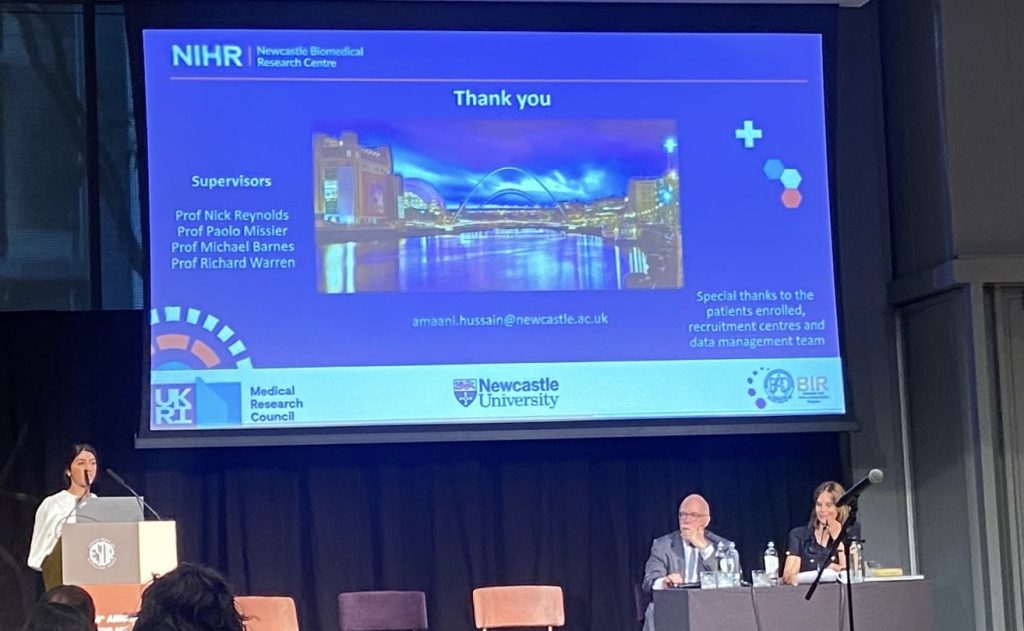
I was pleased to be invited to speak at this year’s International Psoriasis Council Symposium, held during the 54th European Society for Dermatological Research (ESDR) meeting in Antwerp, Belgium. It was an amazing opportunity to share an update on my PhD research, which looks at how artificial intelligence (AI) can improve treatment selection in psoriasis.
Psoriasis is a long-term skin condition that causes red, scaly areas. There are now many effective treatments called biologic therapies, which work by targeting parts of the immune system involved in psoriasis. Despite these options, it can be hard to know which biologic will work best for each individual. Right now, dermatologists often go through a long and costly process of trial-and-error to find the most appropriate treatment. My research is trying to change that by developing an AI tool that can help dermatologists choose the safest and most effective biologic for each patient.
My presentation sparked some insightful conversations, and these continued during the conference’s social events and later at a poster walk where I presented more of my work.
The meeting took place in a very unusual and memorable venue: the Flanders Meeting & Convention Center, which is part of Antwerp Zoo! This venue was complete with dramatic exhibits such as a suspended whale skeleton and a stunning butterfly room.
Over the four days, I listened to inspiring talks from both leading scientists and early-career researchers. It was fantastic to discuss ideas and return with fresh thoughts to shape the next phase of my work. One of the most powerful moments for me was a panel discussion led by women scientists who spoke openly about the challenges and benefits of working in research as a woman.
I had never really thought of visiting Antwerp before, but after seeing its beautiful buildings, fascinating culture, and endless chocolate shops, I’d recommend a visit!
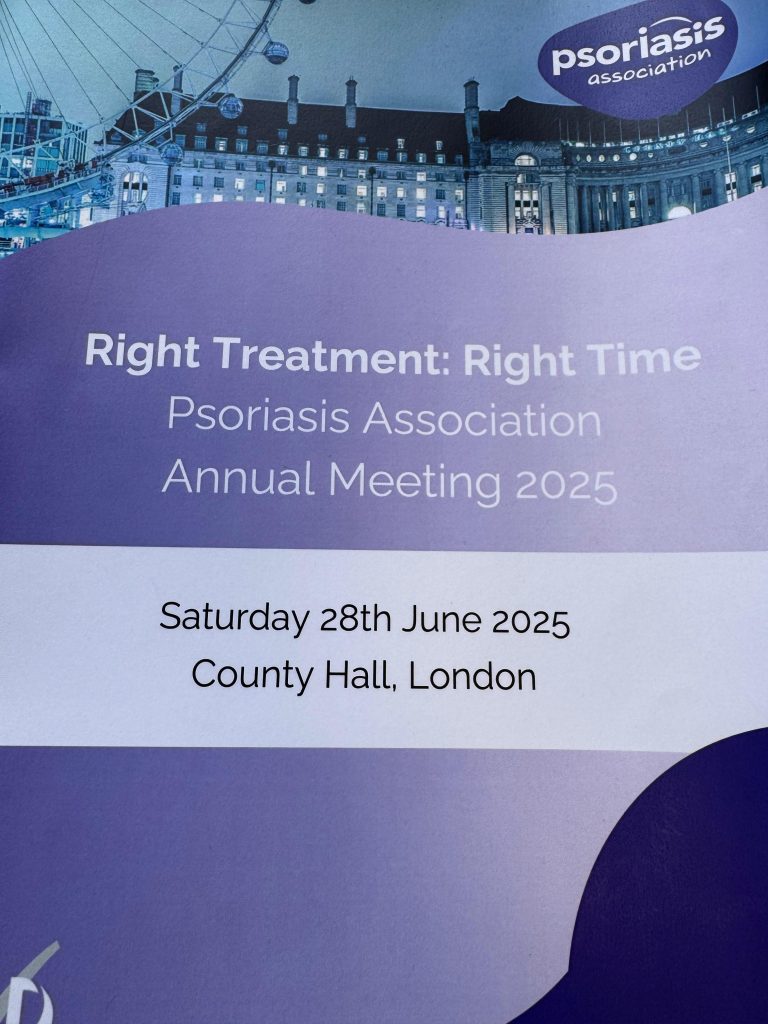
Reflections on the Psoriasis Association Annual Meeting, June 2025, London by Research Assistant, Shaurya Pal
Walking into County Hall, London, on 28th June 2025, I could feel the excitement in the air. Doctors, researchers, and patients had gathered for the Right Treatment: Right Time Annual Psoriasis Meeting, all sharing knowledge about psoriasis—a skin condition that causes red, itchy patches. The main theme of the day stayed with me: giving patients the right treatment at the right time is key to keeping them safe and healthy.
The first talk by Professor Darren Ashcroft really caught my attention. He explained that factors like smoking, alcohol, and being overweight can make psoriasis worse. He also highlighted that other health conditions, such as cancer and cardiovascular disease, can influence psoriasis too. For me, this was a big reminder that treatment isn’t just about the skin—it’s about the whole patient. Understanding these links helps researchers and doctors make better choices to keep patients safe.
Next, Dr. Andrew Pink spoke about new treatments and their safety. He explained that biologics, like Icotrokinra (IL-23), and the topical Topinarof, are very well tolerated, while Spesolimab shows good results for a serious type of psoriasis. He reminded everyone that most patients have mild to moderate psoriasis, so treatments must be carefully matched to the right severity at the right time. It was inspiring to see how researchers make patient safety their top priority.
There were also talks by Dr. Thivi Maruthappu on diet and nutrition, and Dr. John Lee, who shared insights from MySkin.org, where patients contribute their experiences. These sessions showed me how listening to patients helps doctors provide the right treatment at the right time—not too early, not too late, and always safely.
In the afternoon, Professor Catherine Smith spoke about how psoriasis and heart disease share the same biological pathways, and Luc Francis, a young researcher, presented his work on biomarkers of remission. Both talks made it clear that timely treatment can prevent long-term health problems.
The day ended with patient panels and expert discussions, emphasizing that patients and researchers working together is essential to improve care.
For me, the conference was more than just learning about new medicines—it was a reminder that every decision in research and treatment should prioritize patient safety. I left inspired to continue my work, making sure that the right treatment is given at the right time, for the benefit of patients everywhere.
By Henry Song, Artificial intelligence and data science in multiple long-term conditions theme PhD student
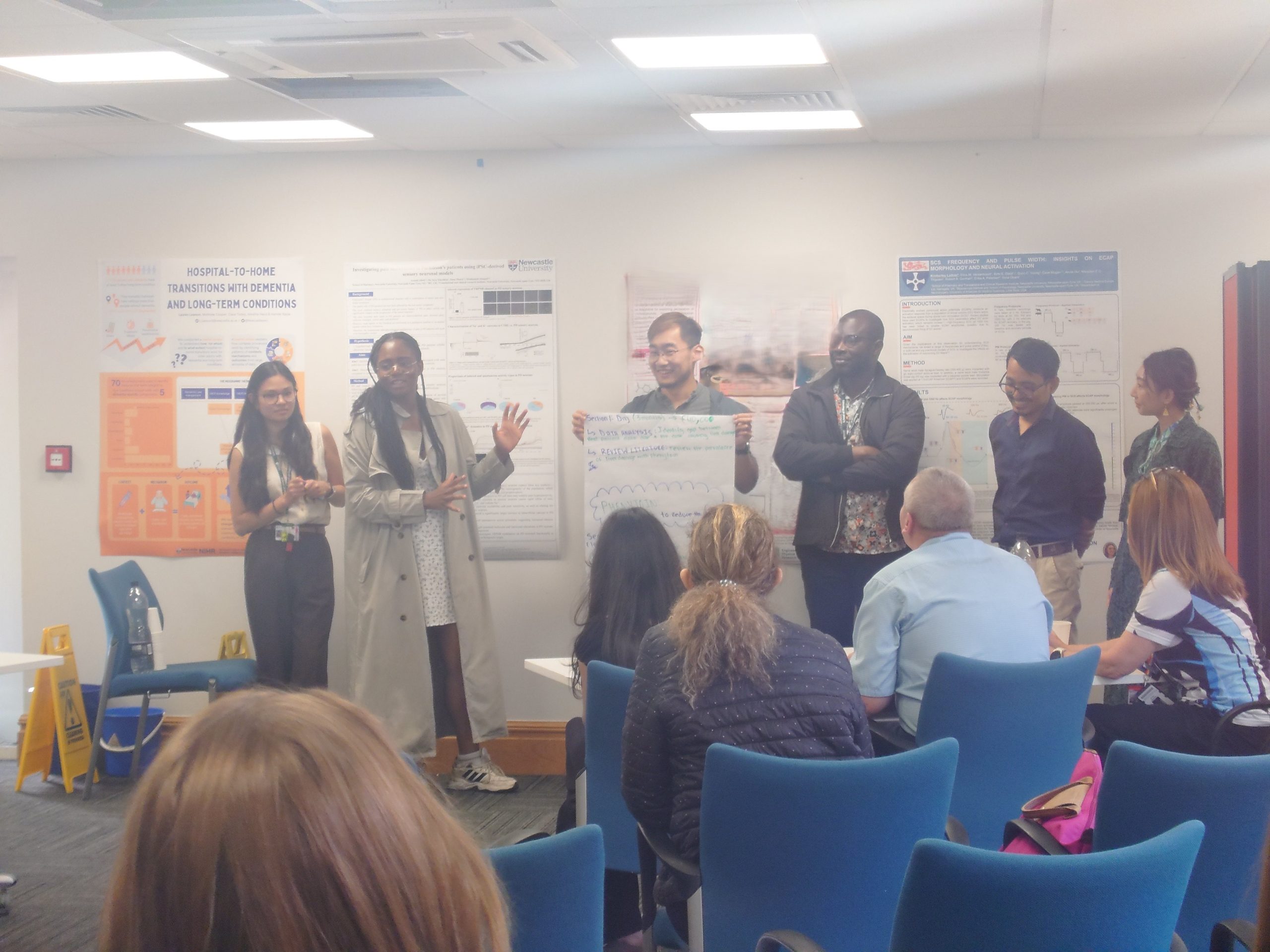
Attending the NIHR Newcastle PSRC/Pharmacy event on the 19th of June was a very positive experience for me. Although I was not able to present my latest research findings due to recent changes in my project dataset, the day still proved to be highly valuable.
I had the chance to see a wide range of presentations from fellow students and colleagues. Some of the work provided direct inspiration for my own research, while others helped to broaden my perspective on the diverse approaches within our field. I was particularly struck by the experimental-based studies on display, which were not only highly innovative but also showed real potential for future impact.
In the afternoon, the workshop on research funding applications was especially useful. It gave me a first insight into the key steps, structure, and approaches involved in applying for research grants. This will no doubt be very important as I continue to develop my academic career.
Overall, the event was an excellent opportunity to learn, connect, and reflect on both my own project and the wider research landscape.
Our Data and AI CoTheme Lead Professor Nick Reynolds has been invovled in the developement of AI, called DeepMerkel, which can determine the course and severity of aggressive skin cancers enabling medics to personalise treatment.

To hear more about DeepMerkel visit the Newcastle University Press office page and view the associated papers below:
- Andrew TA, Alrawi M, Plummer R, Reynolds NJ, Sondak V, Brownell I, Lovat PE, Rose A and Shalhout S (2024). A Hybrid Machine Learning Approach for the Personalized Prognostication of Aggressive Skin Cancers. Nature Digital Medicine Ref NPJDIGITALMED-11157R1
- Andrew TW, Erdmann S, Alrawi M, Plummer R, Shalhout SZ, Sondak V, Brownnell I, Lovat PE and Rose A (2024.) A multivariable disease-specific model enhances prognostication beyond current Merkel cell carcinoma staging: An international cohort study of 10,958 patients – ScienceDirect. Journal of the American Academy of Dermatology. : Ms. No. JAAD-D-24-01601R3