

By Anonymous Public Contributor
I am a public contributor who has been involved for about six years with many interesting research projects.
I volunteered to give my views to researchers, as, at the age of 75, I have experienced many problems relating to health and social issues. I am retired and have more time, which enables me to participate as a public contributor both online and at in-person meetings.
As both a person who suffers from multiple health conditions and a carer for two people who have complicated health problems, I have been able to contribute my opinions and views on different subjects. I hope my contribution has been helpful in shaping the research studies by responding to the questions posed by the researchers.
I think that public involvement is very important in order to give as wide a view as possible in research studies. Opinions from patients and carers from different ethnic, class, disability and cultural backgrounds may raise issues which researchers need to take into account.
For example, having a family member with liver problems, I was able to contribute to research which highlighted the prejudice the public has about liver transplants where the patient has a problem with alcohol. The researcher designed the study so that information which may have been difficult to include was obtained discreetly, as many patients and carers sometimes try to hide the problem.
By including relevant public contributors’ views and stories, such things as living with a colostomy bag or problems experienced with toileting situations are brought to the attention of researchers.
I am pleased that being involved as a public contributor has improved my IT skills and given me more confidence to speak at meetings.
I have seen researchers suddenly become aware at meetings, on hearing answers to their questions of areas of research which they had not previously thought about.
Call to action.
“Make your research results relevant to all by using PPI.”

By Safer Integrated Health and Social Care Environments PhD Student, Lauren Lawson
In August I was lucky enough to have the opportunity to travel to Singapore to attend the BMJ International Forum on Quality and Safety in Healthcare. I presented a poster about a service evaluation I had worked on, led by Dr Matt Cooper, which explored a hospital discharge service providing one-to-one, personalised support for carers of people leaving hospital.
The conference theme, moving together toward sustainable quality, emphasised the importance of collaboration across sectors to achieve lasting improvements in healthcare. Many sessions focused on involving patients and carers as partners in care, by embedding lived experience into service design and evaluation to make change meaningful and sustainable. Other sessions explored how to support population health across the life course, recognising the social factors that shape health and the role of community-based care.

“For me, a key message was that sustainability in healthcare also depends on continuity, where good care extends beyond the hospital to meet people’s needs in the community.”
These messages echoed the key findings from our service evaluation, which highlighted how person-centred, inclusive support can empower carers to support their own wellbeing and the patient during hospital-to-home transitions. Our approach of working with staff and carers to understand the service’s impact reflected the same emphasis on participation and learning that was central to the conference. For me, a key message was that sustainability in healthcare also depends on continuity, where good care extends beyond the hospital to meet people’s needs in the community.
After the conference I got to explore Singapore and think about sustainability in a different way. The contrast between greenery and skyscrapers, the hawker centres blending food from diverse communities together, and the evening light show through the Supertrees were all incredible reminders the benefits of collaborative design.

by Hiranmayi Madabhushi Hari, Research Assistant, working with Dr Anna Robinson-Barella and Prof Andy Husband.
Hiranmayi Madabhushi Hari, one of our Research Assistants working with Dr Anna Robinson-Barella and Prof Andy Husband, recently attended training about D/deaf awareness. In this reflective blog, Hiranmayi shares a call to action for inclusive research approaches for people who are Deaf and/or Hard of Hearing.
Behind every statistic on deafness (1,2) lies a painful truth: people who are Deaf and Hard of Hearing (HoH) continue to be sidelined in healthcare, research, and everyday life. Deafness is a hidden disability, one you cannot always “see”, yet misconceptions endure. Too often, society clings to inappropriate labels like “deaf & mute/dumb” or “hearing impaired”, “handicapped” terms rooted in stigma. The distinctions between Deaf, deaf, Hard of hearing and Deafblind remain poorly understood, while assumptions that cochlear implants or hearing aids “fix” hearing only deepen isoloaton.
Language matters. Labels must respect individual identity, not reinforce exclusion and a lack of awareness can have very real consequences. Many people cannot lipread, nor do they necessarily know British Sign Language (BSL). Without interpreters, functional hearing loops, or accessible systems, they are left excluded from basic services, including healthcare. For many BSL users and D/deaf people, poor mental health outcomes are a direct consequence of systemic barriers, worsened when communication needs are ignored, interpreters are absent, and accessible systems simply don’t exist. The recent Still Ignores: The fight for Accessible Healthcare report (3) describes this neglect as a “damning indictment”: Deaf patients left without understanding diagnoses, unable to contact their GP, and excluded from safe, equitable care.
These failures spill into research, where D/deaf people are often excluded from clinical trials or overlooked in inclusion criteria. D/deaf awareness, culture, and communication must be embedded in both research design and service delivery. As researchers, we must ask ourselves: are our services and research strategies truly accessible? Do we respect preferred communications? Do we prioritise D/deaf culture in research? Change requires not pity but patience, awareness and urgent action.
References:
- Prevalence of British Sign Language [Internet]. RNID. [cited 2025 Sep 17]. Available from: https://rnid.org.uk/get-involved/research-and-policy/facts-and-figures/prevalence-of-british-sign-language/
- GOV.UK [Internet]. [cited 2025 Sep 17]. The British Sign Language (BSL) report 2022. Available from: https://www.gov.uk/government/publications/the-british-sign-language-bsl-report-2022/the-british-sign-language-bsl-report-2022
- Still ignored: the fight for accessible healthcare. Available from: https://rnid.org.uk/wp-content/uploads/2025/05/Still-ignored-the-fight-for-accessible-healthcare.pdf

Research Assistant, Amaani Huassain
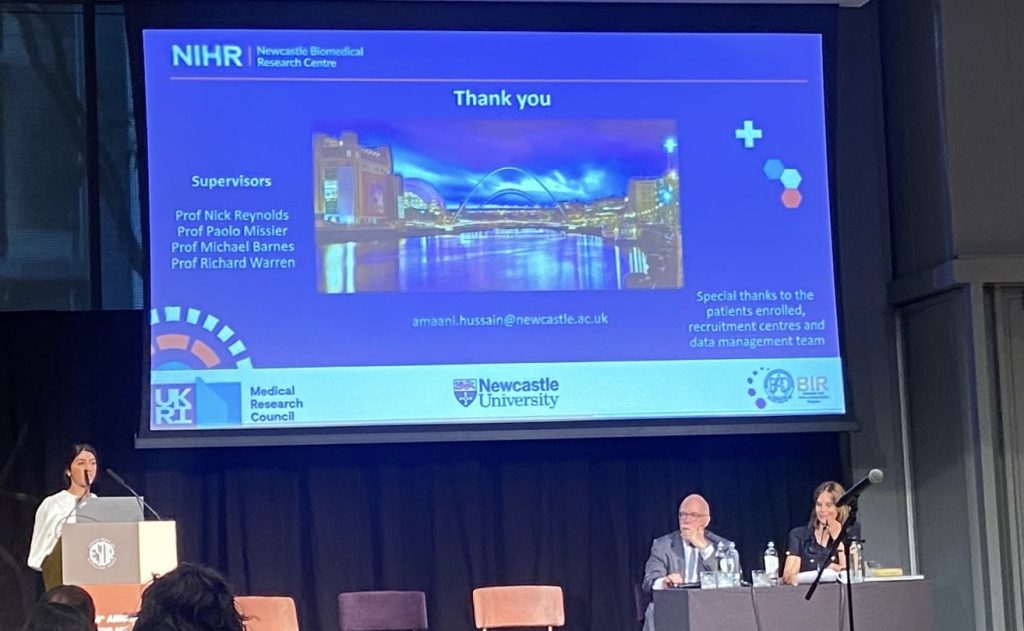
I was pleased to be invited to speak at this year’s International Psoriasis Council Symposium, held during the 54th European Society for Dermatological Research (ESDR) meeting in Antwerp, Belgium. It was an amazing opportunity to share an update on my PhD research, which looks at how artificial intelligence (AI) can improve treatment selection in psoriasis.
Psoriasis is a long-term skin condition that causes red, scaly areas. There are now many effective treatments called biologic therapies, which work by targeting parts of the immune system involved in psoriasis. Despite these options, it can be hard to know which biologic will work best for each individual. Right now, dermatologists often go through a long and costly process of trial-and-error to find the most appropriate treatment. My research is trying to change that by developing an AI tool that can help dermatologists choose the safest and most effective biologic for each patient.
My presentation sparked some insightful conversations, and these continued during the conference’s social events and later at a poster walk where I presented more of my work.
The meeting took place in a very unusual and memorable venue: the Flanders Meeting & Convention Center, which is part of Antwerp Zoo! This venue was complete with dramatic exhibits such as a suspended whale skeleton and a stunning butterfly room.
Over the four days, I listened to inspiring talks from both leading scientists and early-career researchers. It was fantastic to discuss ideas and return with fresh thoughts to shape the next phase of my work. One of the most powerful moments for me was a panel discussion led by women scientists who spoke openly about the challenges and benefits of working in research as a woman.
I had never really thought of visiting Antwerp before, but after seeing its beautiful buildings, fascinating culture, and endless chocolate shops, I’d recommend a visit!
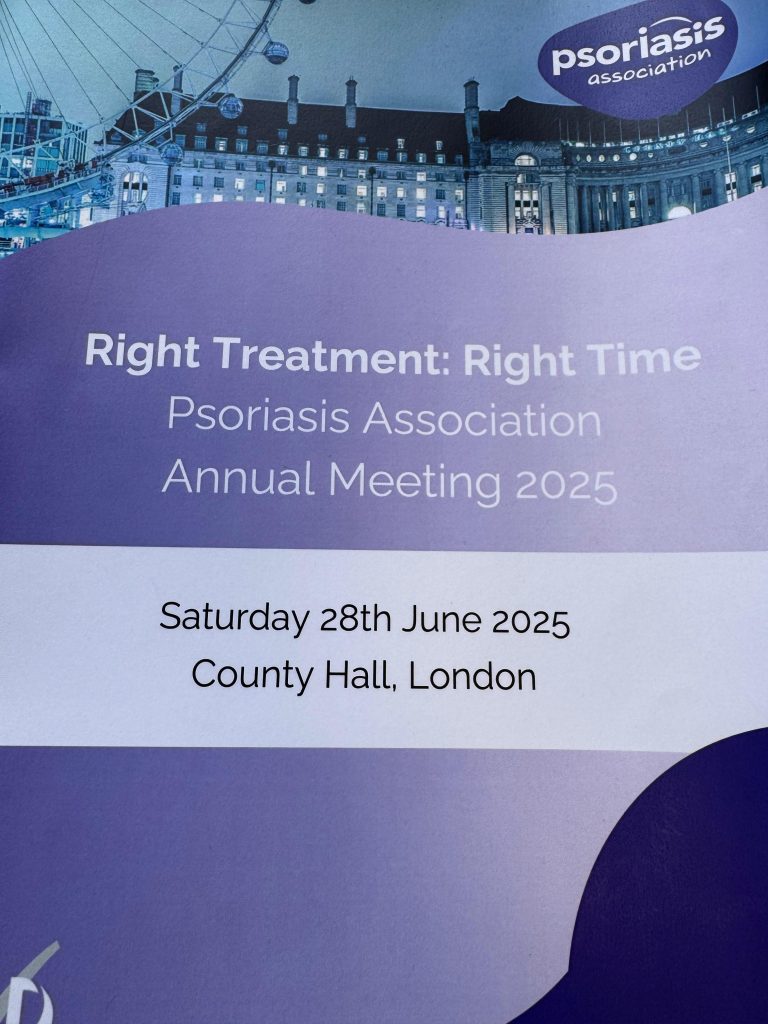
Reflections on the Psoriasis Association Annual Meeting, June 2025, London by Research Assistant, Shaurya Pal
Walking into County Hall, London, on 28th June 2025, I could feel the excitement in the air. Doctors, researchers, and patients had gathered for the Right Treatment: Right Time Annual Psoriasis Meeting, all sharing knowledge about psoriasis—a skin condition that causes red, itchy patches. The main theme of the day stayed with me: giving patients the right treatment at the right time is key to keeping them safe and healthy.
The first talk by Professor Darren Ashcroft really caught my attention. He explained that factors like smoking, alcohol, and being overweight can make psoriasis worse. He also highlighted that other health conditions, such as cancer and cardiovascular disease, can influence psoriasis too. For me, this was a big reminder that treatment isn’t just about the skin—it’s about the whole patient. Understanding these links helps researchers and doctors make better choices to keep patients safe.
Next, Dr. Andrew Pink spoke about new treatments and their safety. He explained that biologics, like Icotrokinra (IL-23), and the topical Topinarof, are very well tolerated, while Spesolimab shows good results for a serious type of psoriasis. He reminded everyone that most patients have mild to moderate psoriasis, so treatments must be carefully matched to the right severity at the right time. It was inspiring to see how researchers make patient safety their top priority.
There were also talks by Dr. Thivi Maruthappu on diet and nutrition, and Dr. John Lee, who shared insights from MySkin.org, where patients contribute their experiences. These sessions showed me how listening to patients helps doctors provide the right treatment at the right time—not too early, not too late, and always safely.
In the afternoon, Professor Catherine Smith spoke about how psoriasis and heart disease share the same biological pathways, and Luc Francis, a young researcher, presented his work on biomarkers of remission. Both talks made it clear that timely treatment can prevent long-term health problems.
The day ended with patient panels and expert discussions, emphasizing that patients and researchers working together is essential to improve care.
For me, the conference was more than just learning about new medicines—it was a reminder that every decision in research and treatment should prioritize patient safety. I left inspired to continue my work, making sure that the right treatment is given at the right time, for the benefit of patients everywhere.
By Henry Song, Artificial intelligence and data science in multiple long-term conditions theme PhD student
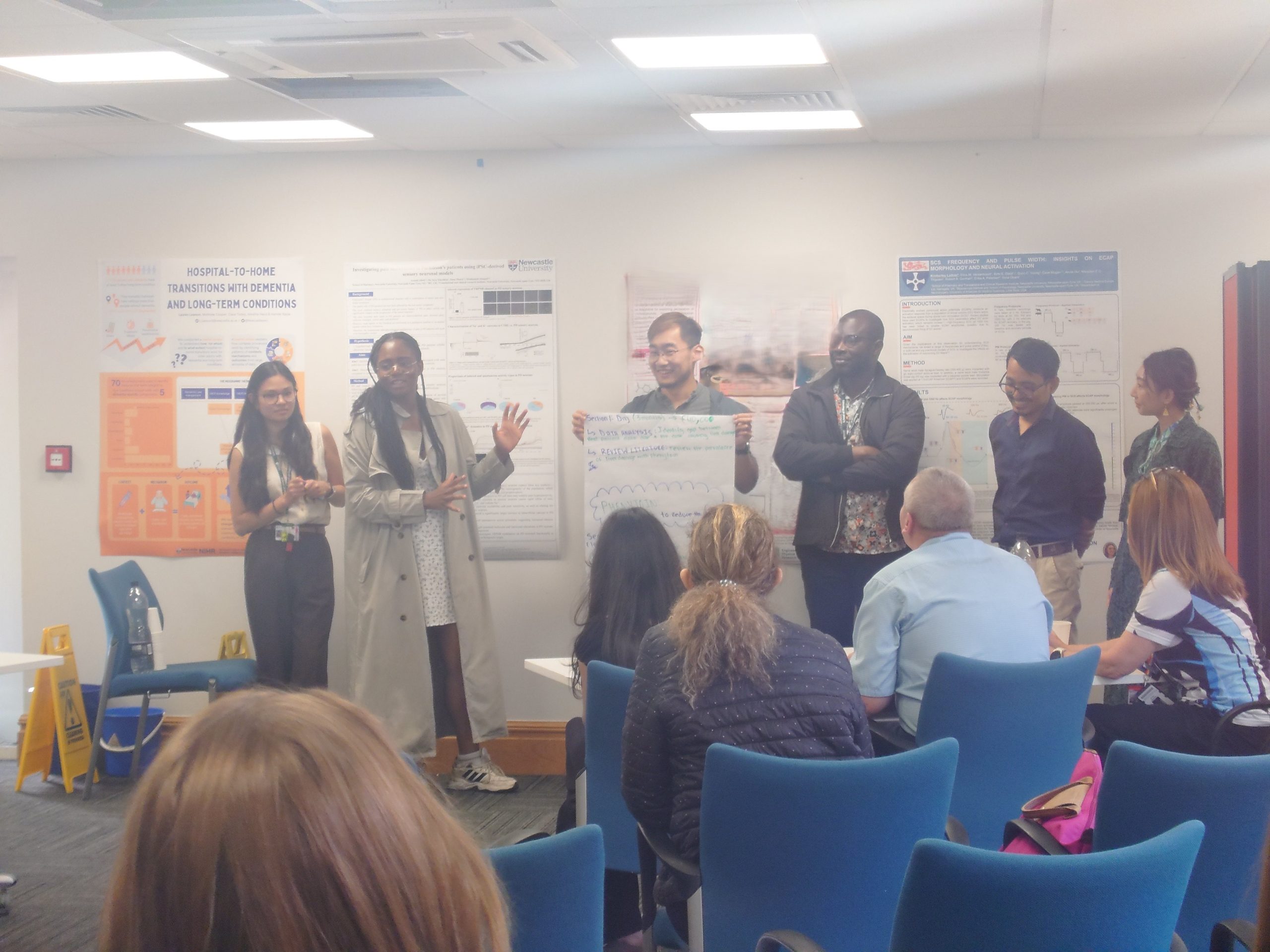
Attending the NIHR Newcastle PSRC/Pharmacy event on the 19th of June was a very positive experience for me. Although I was not able to present my latest research findings due to recent changes in my project dataset, the day still proved to be highly valuable.
I had the chance to see a wide range of presentations from fellow students and colleagues. Some of the work provided direct inspiration for my own research, while others helped to broaden my perspective on the diverse approaches within our field. I was particularly struck by the experimental-based studies on display, which were not only highly innovative but also showed real potential for future impact.
In the afternoon, the workshop on research funding applications was especially useful. It gave me a first insight into the key steps, structure, and approaches involved in applying for research grants. This will no doubt be very important as I continue to develop my academic career.
Overall, the event was an excellent opportunity to learn, connect, and reflect on both my own project and the wider research landscape.
Dr Anna Robinson-Barella
Director of EDI for the NIHR Newcastle PSRC and the Newcastle University School of Pharmacy, Lecture in Pharmacy.
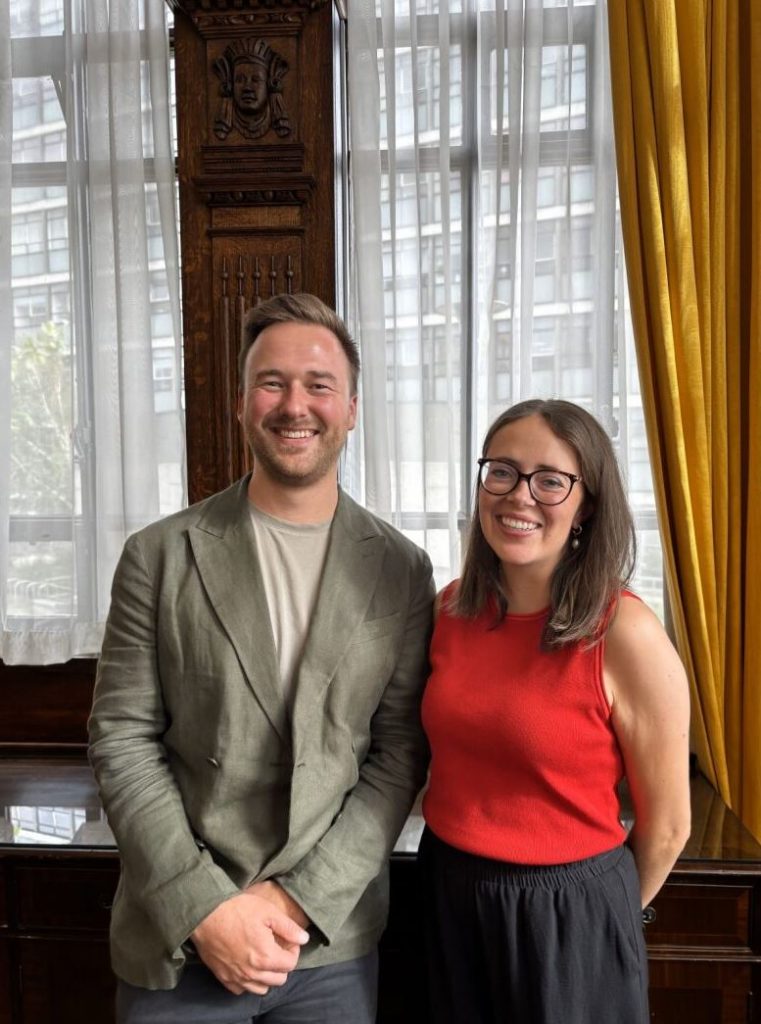
As we approach this new academic year, I am filled with intrigue and curiosity at the prospect of attending the equity diversity and inclusivity (EDI) events that are planned, in collaboration between the NIHR Newcastle PSRC and the Newcastle University School of Pharmacy. As Director for EDI, I am passionate about inclusion, diversity, representation and equity within all that we do in the PSRC – that includes the approaches that our team implement within in their research, as well as the support available for our staff and colleagues. I view the collaborative EDI events as a brilliant opportunity to hear from experts and those with lived-experiences and to learn how to make meaningful change towards equitable, inclusive and effective patient care. I am very much looking forward to the events that we have planned for attendees this year.
Dr Matt Cooper
Deputy-Director of EDI for the NIHR Newcastle PSRC and the Newcastle University School of Pharmacy, Research Associate in NIHR Newcastle PSRC.
I am excited to start my first full academic year as Deputy Director for EDI within the NIHR Newcastle PSRC and the Newcastle University School of Pharmacy. I hope within my role I can support Anna in her Director role and ensure that the EDI strategy is delivered in all aspects of our work. I am particularly passionate about ensuring inclusive research that is translational to practice and building a better future for everyone. The goal of the PSRC is to make real world change within patient safety for patients and the public, of which EDI is a central pillar to this work. The EDI events we will be hosting over the next academic year shine a light on this commitment as we look to learn from those making a difference with their work, inspiring the next generation of pharmacists and researchers. I encourage everyone to attend them if they can and please do reach out with future topics for our next events.
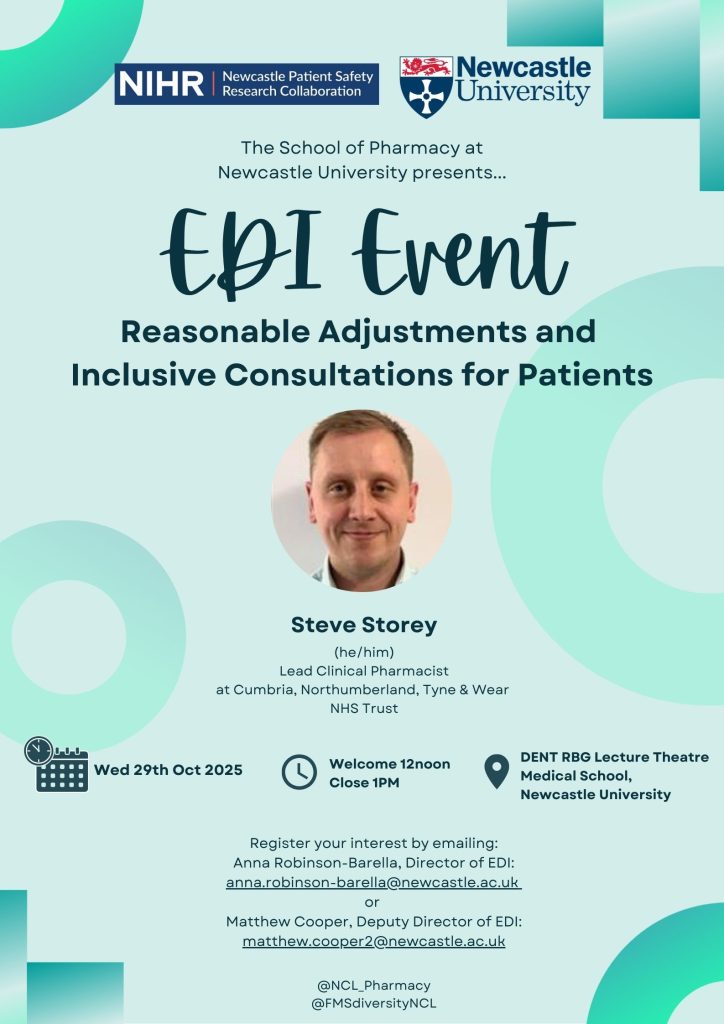
Next EDI Event – Wed 29th October 2025 at 12.00 – 13.00 on the subject of Reasonable Adjustments
A Pre-implementation Study to develop and test an Integrated Discharge Intervention (PreSIDInt study)
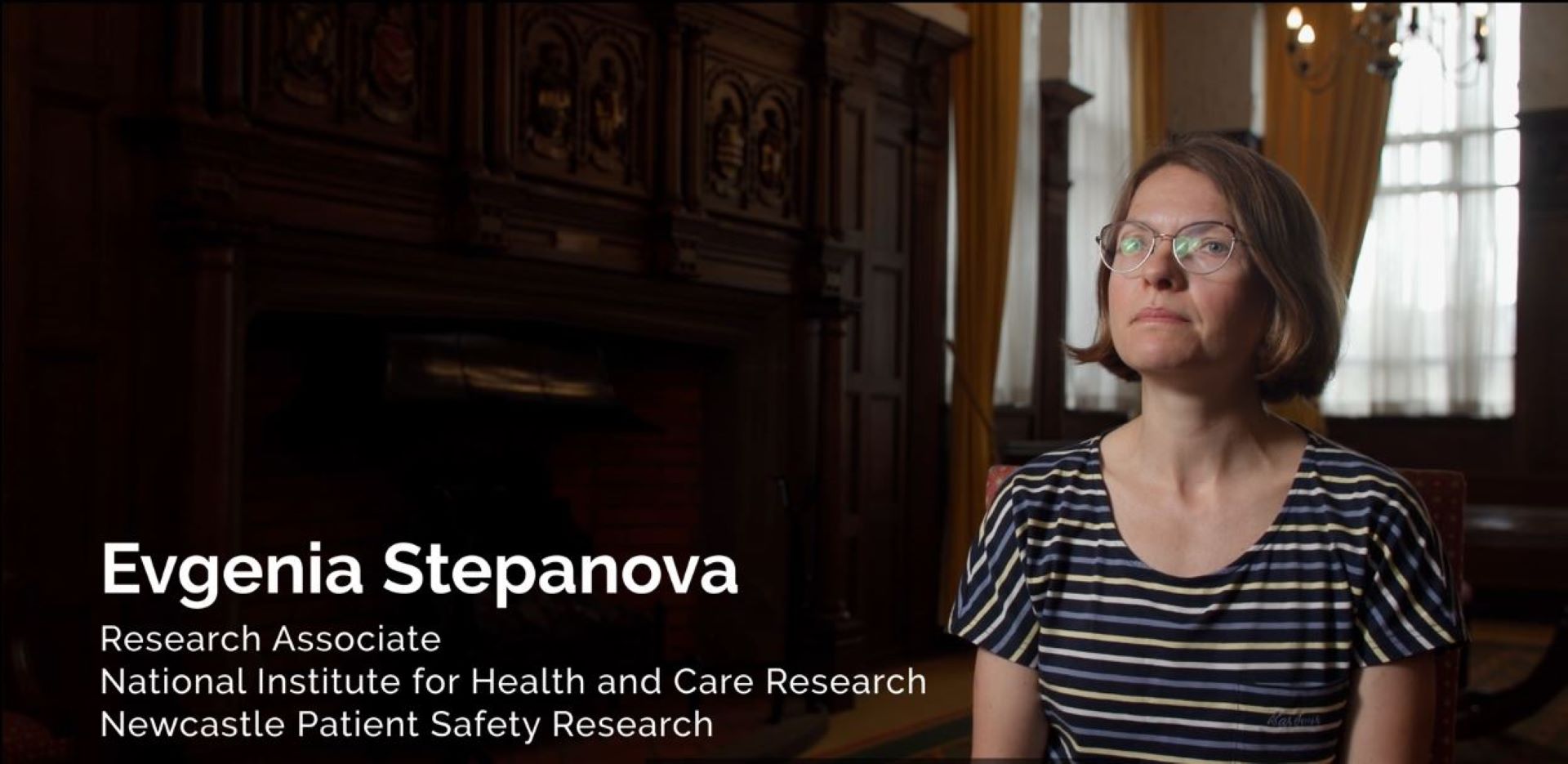
As part of a research project funded by the National Institute for Health and Social Care Research, Professor Hamde Nazar and Dr Evgenia Stepanova explore what happens to patients during the transition from hospital to home. In this video, they highlight the essential role of involving patients and the public through meaningful PPIE (Patient and Public Involvement and Engagement).
To ensure a safe and inclusive space for open dialogue, the project established two PPIE groups—a women-only group and a mixed group—each meeting four times throughout the study. These conversations offered crucial insights into real experiences of hospital discharge, revealing gaps in current research and shedding light on challenges that patients regularly face, such as feeling “in limbo”—with limited information, no clear point of contact, and uncertainty about available support.
Hamde and Evgenia reflect on how these contributions shaped the research and deepened its relevance and impact.
Programme Development Grants award NIHR205674 A Pre-implementation Study to develop and test an Integrated Discharge Intervention (PreSIDInt study)

Experience of participation and poster presentation.
By PhD Student Rajeev Shrestha
On 18th July 2025, I got the opportunity to attend the Great North Pharmacy Research Collaborative (GNPRC) Conference, held at the Hilton Hotel, Gateshead. This event brought together pharmacy professionals, researchers, and pharmacy trainees to explore innovations in medicines optimisation, collaboration, and workforce development.
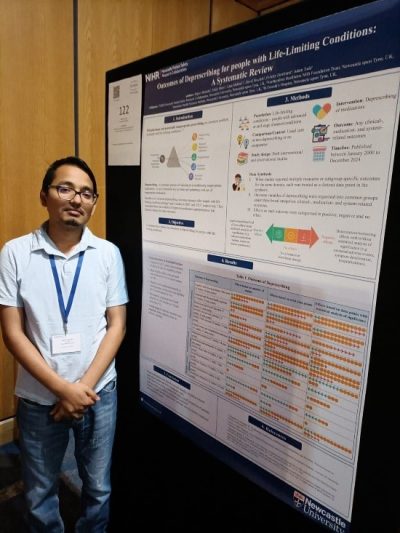
A key highlight for me was presenting my poster titled “Outcome of Deprescribing in People with Life-Limiting Conditions: A Systematic Review”. This study aimed to synthesise evidence on the clinical-, medicine and system-related outcomes of deprescribing practices among palliative patients. I had an opportunity to interact with fellow attendees during the poster viewing sessions that really sparked meaningful conversations around the safer use of medication. Personally, it was encouraging to see the ongoing works on reducing inappropriate use of medication by practising pharmacists.
The conference agenda was rich with insightful sessions. I particularly appreciated the breakout session on “Shared Decision Making and its Role in Reducing Overprescribing,” which also resonate with the area of my research. The growing emphasis on collaboration across sectors, from community pharmacies to NHS manufacturing, highlighted the evolving role of pharmacists in shaping safer, more effective care pathways.
Overall, GNPRC 2025 was a valuable experience to me. The event inspired new ideas, informed ongoing initiatives and deepened our commitment to contributing to quality use of medications.
I’m Liam, a Specialist Clinical Pharmacist in Acute and Emergency Care at Northumbria Healthcare NHS Foundation Trust. I split my time between clinical practice (four days a week) and research (one day a week) through the NIHR Newcastle PSRC Patient Safety Development Award. Since graduating from Newcastle University’s School of Pharmacy in 2022, I’ve been building my research career alongside clinical development, driven by a passion for research sparked during my undergraduate studies.

The NIHR Newcastle PSRC’s impact on clinicians
Traditionally, clinical practice and academia have been seen as separate career paths. Clinicians interested in research often had to pursue it in their own time, outside of demanding full-time roles.
The NIHR clinical academic pathway has transformed this by funding protected research time and reimbursing employers, allowing clinicians to step away from practice to pursue research.
For me, this has meant one day each week seconded at NIHR Newcastle PSRC, where I’ve developed core research skills. Working with experienced researchers has helped me understand the full project lifecycle, from shaping early ideas and designing methodology to recruiting participants, collecting data, and writing up results.
Building Collaborations
Embedding clinicians within the NIHR Newcastle PSRC helps build strong links with partner organisations. Connections with charities and local health and social care providers create future opportunities at both individual and organisational levels. This also broadens the chance for under-represented groups to have a voice, influence practice, and help reduce health inequalities.
At Newcastle University, embedded clinicians benefit from access to leading academics in their field and can learn from their experience. Previously, collaborations were often ad hoc, such as draft reviews or methodology advice. These awards now enable clinicians to work more closely with academics and gain a deeper understanding of research and academia.
Why is this valuable to the public?
Research-active organisations are linked to better patient outcomes. Combining clinical work with research lets me address real issues I encounter in practice, shaping projects that can drive meaningful change.
In acute medicine, I’ve focused on discharge and follow-up challenges. Through the NIHR Newcastle PSRC, I’m now working on a project exploring these issues for homecare recipients and those working in the industry.
Being embedded in both sectors also helps spread research findings more effectively, supporting better service improvements and outcomes.
Next Steps
A key goal is to encourage more healthcare professionals to engage in research. The NIHR clinical academic pathway supports this by offering development alongside clinical roles, leading to qualifications and national research leadership opportunities.